
Notice dated October 19, 2026. Information checked November 4, 2026.
If you received the October 19 Camas PFAS water notice, you may be looking at your kitchen faucet differently. You may also be wondering whether the filter you already own does anything about the chemicals listed in the letter.
The notice reports PFOA and PFOS above Washington's State Action Levels at Wells 5 and 13. It describes the situation as a non-emergency and includes specific advice for people who are pregnant, breastfeeding, or mixing infant formula with tap water.
At True Plumbing, our approach starts with understanding the water before recommending equipment. We help Camas homeowners check what an existing system does, compare treatment options, and plan an installation around the way their household uses water.
Read the original letter: City of Camas PFAS notice, October 19, 2026 (PDF, 3 pages, 15.3 MB). This is a resident-provided copy of the city notice. For subsequent results and project updates, use the City of Camas PFAS page.
What The October Notice Reports
PFAS is a group of manufactured chemicals; PFOA and PFOS are two members of that group. The letter identifies September 8, 2026 sampling at the two wells and reports these values:
- PFOA: Well 5: 4.72 ppt; Well 13: 4.18 ppt; State Action Level Listed: 4.0 ppt
- PFOS: Well 5: 7.48 ppt; Well 13: 11.2 ppt; State Action Level Listed: 4.0 ppt
Ppt means parts per trillion. Values are reproduced from the notice's “Detected Level” column.
The notice explains the exceedance in terms of a running annual average over 12 months. These are water-system findings, not test results from your kitchen tap. They do not establish the concentration at an individual home.
The city's current project page also reports that Well 13 was taken out of service for the season on September 29 and that construction of its PFAS treatment facility is underway. That update and your household filtration decision are separate matters. Follow the city's project updates for the status of municipal treatment.
Start With The Notice's Drinking-Water Advice
The letter recommends an alternative drinking-water source or household treatment certified to lower PFAS for people who are pregnant, breastfeeding, or preparing infant formula with tap water. It also says boiling does not reduce PFAS.
Washington DOH's current guidance recommends acting sooner for pregnant people and households with children age six and younger. For personal health or infant-feeding questions, speak with your healthcare provider. The DOH household drinking-water guidance explains the recommendations and available options.
Our role is to help you evaluate and install appropriate plumbing equipment. The health guidance comes from the city, DOH, and your healthcare professional.
Check Your Existing Filter Before Replacing It
A refrigerator filter, pitcher, under-sink unit, or whole-home system may already be part of your routine. Its presence alone does not establish PFAS reduction. DOH cautions that filters differ in what they remove, and a water softener does not remove PFAS.
Find the model number and replacement-cartridge information. Then check the independent certification listing for the exact product and the specific reduction claim. The EPA's certified-filter guide points consumers toward NSF/ANSI 53 or NSF/ANSI 58 certification with the relevant PFAS-reduction claim. A standard number or a general claim of better-tasting water is not enough to answer that question.
Also check when the cartridge or membrane was last replaced. Treatment depends on keeping up with the manufacturer's instructions; certification does not turn a filter into a maintenance-free system or guarantee zero PFAS at your tap.
For help reading filter claims, this Washington DOH video explains what to look for. It was published in 2023; use the current written sources above for the Camas notice and current guidance.
Video: PFAS Basics 4 - Short Term Solutions: How to Select a POU Water Filter or Bottled Water by Washington State Department of Health. Published December 15, 2023.
Choose Where You Need Treated Water
The next decision is where you want treatment to happen. That choice affects both the equipment and how you use it every day.
- Point of use, such as an under-sink system: What It Treats: Water at the connected outlet; What To Work Through: Which tap supplies drinking and cooking water, available space, and the system's output and maintenance requirements
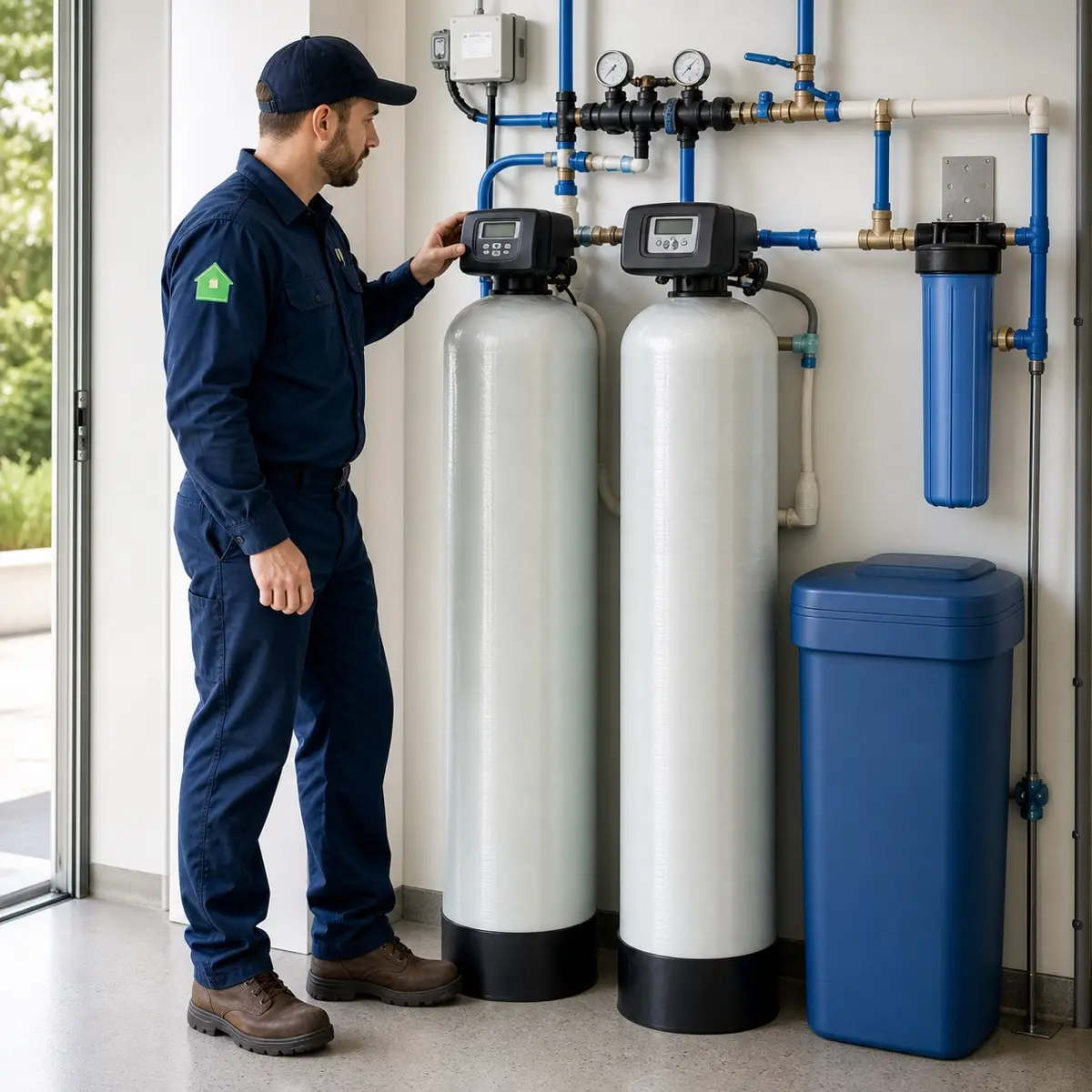
- Whole-home treatment: What It Treats: Water entering the home's plumbing; What To Work Through: Household demand, incoming pressure, installation space, and access for servicing the equipment
For example, suppose you install treatment at a dedicated kitchen faucet but keep filling drinking glasses from an unconnected refrigerator dispenser. That dispenser would still be outside the treatment path. Mapping those everyday uses helps determine whether one outlet fits your goal.
We discuss these choices in our Camas PFAS filtration service guide. Our recommendations account for flow needs and household demand. If your goal is treated drinking and cooking water at one outlet, a point-of-use system may fit. If you want treatment throughout the home, the equipment needs to support the water demand across those fixtures.
How True Plumbing Turns A Filter Choice Into A Workable Installation
We're a locally owned plumbing company based in Vancouver, serving Camas and the surrounding Clark County communities. We install and service both whole-home and drinking-water filtration, with recommendations shaped by the water and the home.
Understand The Water Before Choosing Equipment
Our water filtration service follows a principle our owner, Tyler, emphasizes in his field guidance: test the water before prescribing treatment. His work with private wells has reinforced why the source matters. A recommendation for one well cannot simply be carried over to another home.
For a Camas utility customer, the city's results provide evidence about the municipal supply. If the question is how much PFAS is present at your own tap, that requires appropriate laboratory testing. A hardness test cannot answer it. Washington DOH explains how PFAS water testing works.
Keeping those questions separate helps us define the job: treating confirmed hardness, improving taste, or choosing equipment with a verified PFAS-reduction claim. Each calls for its own selection criteria.
Fit The System To Your Plumbing
We then consider the home's flow and pressure alongside the installation layout. With an under-sink system, that can include cabinet space, the faucet arrangement, and a drain connection when the selected equipment requires one. Whole-home planning brings the main water connection, bypass arrangement, and room for future service into the decision. These details help make the equipment practical to use and maintain.
Make Maintenance Part Of The Decision
Before choosing equipment, understand which replacement parts it uses and what the manufacturer requires to keep it working. A filter that is difficult to reach or has an unclear replacement schedule creates an avoidable problem later.
That handoff matters to customers. In a June 4, 2026 review excerpt published on our filtration page, George S. described receiving an explanation of the work and:
“…advice for the use and maintenance of our new water purification system.”
His review concerns installation and maintenance guidance. It does not identify a PFAS treatment result.
Bring The Notice And Your Current System Details
If you're considering an upgrade, start with the letter and the model information for any treatment equipment you already have. Tell us which taps you use for drinking and cooking, and what you want to change.
Call True Plumbing at (360) 207-6064 to talk through the notice and confirm availability. You can also request a filtration visit online; our office will confirm the appointment.