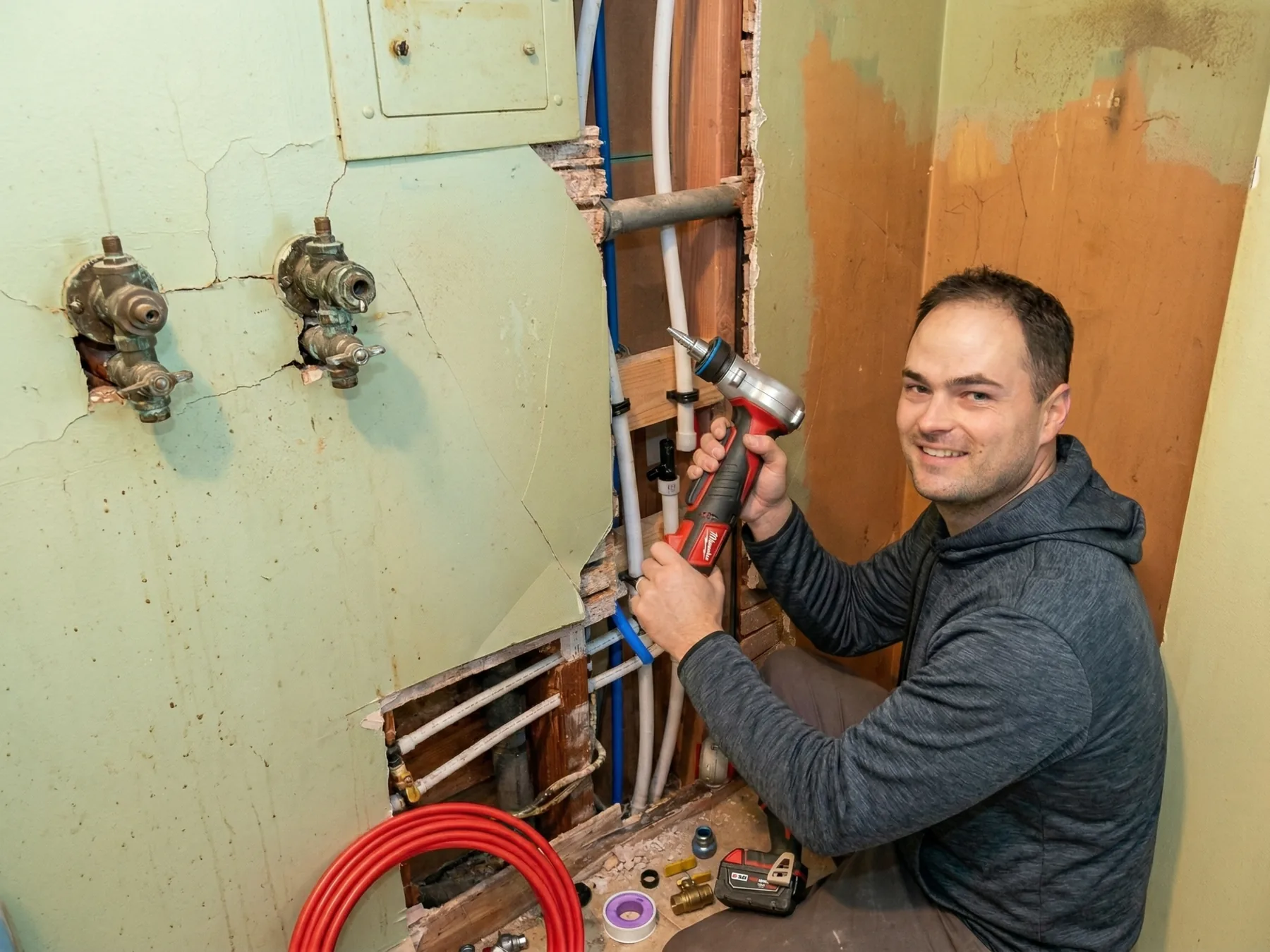



Drinking & cooking water
A certified point-of-use system, often installed below the kitchen sink, focuses treatment where most ingestion happens.
The City activated Well 13 for summer demand and published a June sample above Washington's current PFOS state action level. These numbers describe the City's source-water update, not a test of your individual faucet.
Read the City's July 2026 notice and follow the Well 13 treatment project.
PFAS are a large family of long-lasting chemicals. Many break down very slowly and can remain in water and the environment for many years. Scientists and public health agencies continue to update PFAS guidance as more research becomes available.
For Camas homeowners, the practical next step is to follow the City's latest notice and choose treatment certified for the specific PFAS reduction claim you need. Read the Washington Department of Health PFAS guidance, the household drinking-water guidance, and the EPA's PFAS overview for current public-health information.
You do not need the biggest system by default. The right approach depends on where you want treated water, household demand, available space, and the maintenance you are comfortable managing.
A certified point-of-use system, often installed below the kitchen sink, focuses treatment where most ingestion happens.
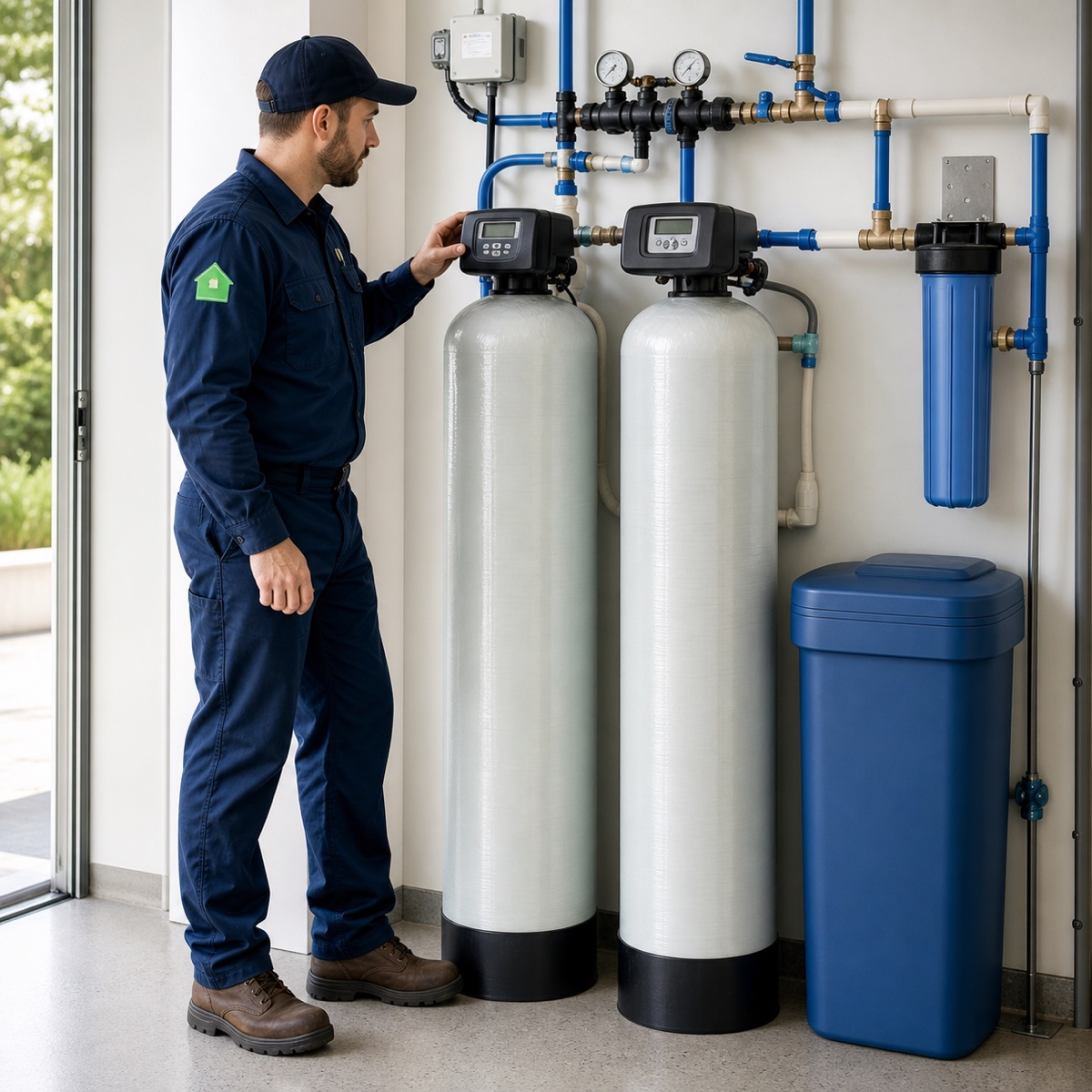
A point-of-entry system treats water as it enters the house and must be sized around flow, pressure, source water, and media life.
We can review the official Camas information, your household goals, and the installation conditions before recommending a system.
(360) 207-6064Before you book
Quick answers to help you choose your next step.
PFAS cannot be seen, smelled, or tasted, so product selection should be based on documented source-water information and a clear treatment goal, not a visual guess. For a household focused on drinking and cooking water, a certified point-of-use system may be the most direct option. For coverage at every tap, a properly designed point-of-entry system may be a better fit.
True Plumbing handles the plumbing-side evaluation and installation: available space, flow, pressure, prefiltration, bypasses, drains, and service access. We match those conditions to a system with an independent PFAS reduction certification and a maintenance plan you can realistically follow.
Local context
The City of Camas says Well 13 is used during late-spring and summer demand. Its June 2026 sample reported PFOS at 16.3 parts per trillion, above Washington's current 4-ppt state action level. The City also reports that other wells tested below 4 ppt in the latest round, while historical results mean some sources may continue to require monitoring.
The City's permanent Well 13 project uses ion-exchange treatment and is actively under construction. Current project information anticipates completion in spring 2027. Until then, the City points concerned residents toward independently certified in-home treatment options. Because City sources can be blended and conditions vary, the Well 13 result should not be presented as the exact concentration at every Camas tap.
FAQs
The City activated Well 13 on June 16, 2026 to meet summer water demand. A June sample reported PFOS at 16.3 parts per trillion, above Washington's current 4-ppt state action level. The City says the well normally comes offline when demand drops around mid-September and that permanent ion-exchange treatment is under construction.
Not necessarily. The 16.3-ppt figure is the City's June 2026 sample result for Well 13. Camas distributes water from multiple sources and conditions can vary, so that result should not be treated as a test of an individual tap. An accredited laboratory test is the way to obtain a property-specific result.
Washington DOH says most PFAS detections are not an immediate emergency, which gives households time to review official guidance and choose an appropriate response. DOH recommends reducing exposure when results exceed federal limits or state action levels, with additional guidance for pregnant people and households with young children.
No. EPA guidance says heating or boiling does not remove PFAS. A treatment technology designed and certified for PFAS reduction is the relevant household option.
A standard water softener is designed for hardness minerals, not PFAS. Do not assume it provides PFAS reduction unless the exact product has an applicable independent certification and is operated according to that certification.
Follow the City's current water updates and determine whether your home is connected to the affected source. If you are considering treatment, compare certified point-of-use and whole-home options based on your drinking-water needs, installation conditions, and maintenance plan. Health-specific questions should go to the Washington Department of Health or your healthcare provider.
Replacement timing depends on the product, household water use, source-water conditions, and system design. We provide the manufacturer's required schedule and make sure the system can be accessed for service. Staying on that schedule is essential to maintaining performance.
Reverse osmosis is commonly used at the point of use for drinking and cooking water. Whole-home activated-carbon or ion-exchange systems treat water as it enters the house but must be sized for household flow and maintained correctly. The right choice depends on the coverage you want, installation conditions, budget, and maintenance plan.
EPA recommends looking for an independent PFAS reduction claim under standards such as NSF/ANSI 53 for filtration or NSF/ANSI 58 for reverse osmosis. Certification scope matters, and current certifications do not automatically guarantee reduction to every current regulatory limit, so verify the exact product listing and claim.
Local references: City of Camas July 2026 notice · Camas PFAS project updates · WA DOH household guidance · EPA home filter guidance. Utility boundaries vary by address, so confirm the serving utility before choosing treatment or planning work.
Many PFAS break down very slowly, which allows them to remain in water and the environment for a long time. Guidance continues to change as scientists and public health agencies learn more. Use current City of Camas and Washington Department of Health information when evaluating your water, then choose a treatment system certified for the specific PFAS reduction claim you need.
PFAS treatment is not one-size-fits-all. We work through the practical decisions in order so the proposal is understandable and maintainable.
We start with the address and current official utility information. If you need a tap-specific concentration, an accredited laboratory test is the appropriate next step.
Drinking and cooking water only, or water at every fixture? That choice drives system type, size, cost, and maintenance.
We assess pressure, peak flow, space, sediment, drain access, bypass needs, and a practical location for future service.
You receive an upfront proposal for a system with an applicable independent PFAS reduction certification and a written maintenance schedule.
Compare the practical benefit with the limit that matters before choosing a system.
| Decision | A certified system can | Important limits |
|---|---|---|
| Performance | Reduce the PFAS compounds covered by its certification when the system is correctly sized, installed, and maintained. | It should not promise removal of every PFAS compound or results beyond the product's certified claim. |
| Coverage | Treat drinking water at one fixture or water throughout the home, depending on the system selected. | A standard water softener is not PFAS treatment unless that exact product is certified for PFAS reduction. |
| Upkeep | Follow a defined filter or media replacement schedule designed to maintain expected performance. | Boiling does not remove PFAS, and overdue filter media may no longer provide the expected reduction. |
Independent information: This is a True Plumbing service page, not a City of Camas, Washington State Department of Health, or EPA page. True Plumbing is not affiliated with those agencies. Official notices and health guidance remain the controlling sources.
True Plumbing is family-owned and based in Vancouver, not a national franchise. Our licensed plumbers regularly serve Camas, Vancouver, Washougal, Battle Ground, Ridgefield, and nearby Clark County communities.
Homeowners call us for straightforward recommendations, clear communication, respectful work in the home, and scheduling they can plan around. We explain what a treatment system is certified to do, what it cannot promise, and what maintenance it will need before you commit. Learn more about True Plumbing.
Selected Google review summaries (paraphrased)Rating and total shown cover all True Plumbing Google reviews.
Swipe, drag, scroll sideways, or use the arrow keys to browse reviews manually. Automatic movement pauses while you browse. With the review row focused, press Space to pause or resume automatic movement.
True Plumbing installed a water softener and filtration system and the whole experience was excellent. Eric did a fantastic job and took the time to answer all my questions.
Arrived on time and worked steadily till the job was done. Walked me through the work and how to maintain our new water purification system. I'll look to True Plumbing first from now on.
Nick is excellent at his job. Extremely knowledgeable, quick to diagnose the problem and explain how he's going to fix it. Would refer him to anyone with plumbing issues.
All profile totals synced within 24 hours; oldest sync 2026-11-03T10:24:14.37+00:00

Compare certified drinking-water and whole-home PFAS treatment options with a licensed local plumbing team.
Call to confirm current availability · Washington and Oregon licensed · licensed, bonded & insured