A drain that empties a little slower than it used to is easy to shrug off. It is also the earliest warning your plumbing gives you, and it rarely gets better on its own.
What a slow drain is telling you
When water pools around your feet in the shower or takes its time leaving the sink, something is narrowing the pipe. In a single fixture it is usually a local buildup: hair and soap in a bathroom drain, grease and food in the kitchen. When several drains slow down together, the trouble is further along, in the pipe that carries everything out to the sewer. Either way, the pipe will not clear itself, and the opening only gets smaller as more debris catches on what is already there.
How a small clog becomes a main-line backup
A partial clog acts like a net. Every bit of grease and waste that passes has a chance to snag, so the blockage grows while the flow keeps dropping. Given enough time, a slow drain becomes a full stop. If that happens in the main line, waste has nowhere to go and backs up into the lowest fixtures in the house, often a basement floor drain or a first-floor tub. What started as a minor annoyance turns into raw sewage on your floor.
The damage that comes with waiting
A backup does more than ruin your day. Water that cannot drain finds another way out, seeping into cabinets and subflooring. Standing water and damp materials grow mold within a couple of days, and sewage carries bacteria you do not want in your home. Cleanup and repairs after a backup cost far more than clearing a slow drain early. The longer a blockage sits, the more it hardens and the harder it is to remove.
Simple checks before you call
A few quick things are worth trying first:
- Pull the stopper in a bathroom sink or tub and clear out the hair and gunk caught on it.
- Pour a pot of hot (not boiling) water down a kitchen drain to loosen light grease.
- Try a cup plunger with a tight seal on the single slow fixture.
- Notice whether one drain is slow or several are, and whether it is getting worse.
If a single drain speeds back up after this, you probably caught it in time.
When to stop and call a plumber
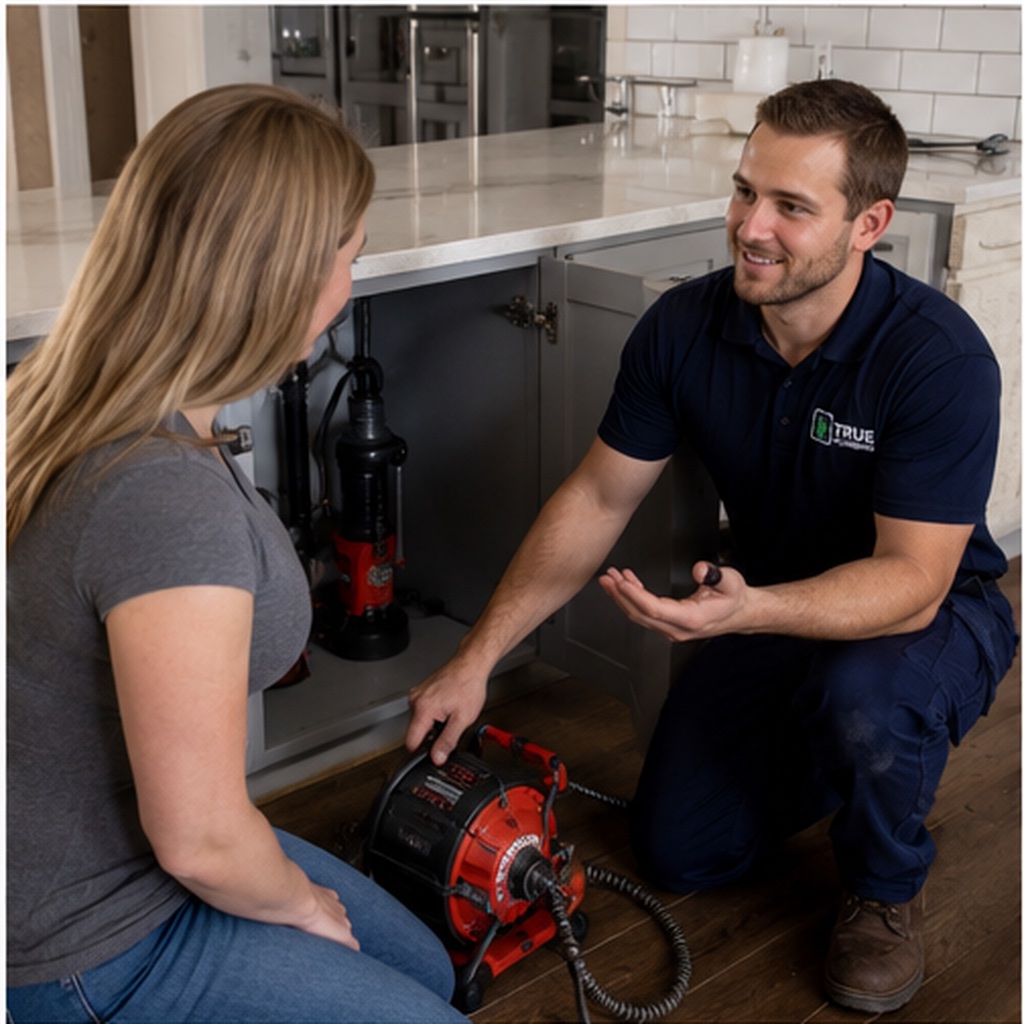
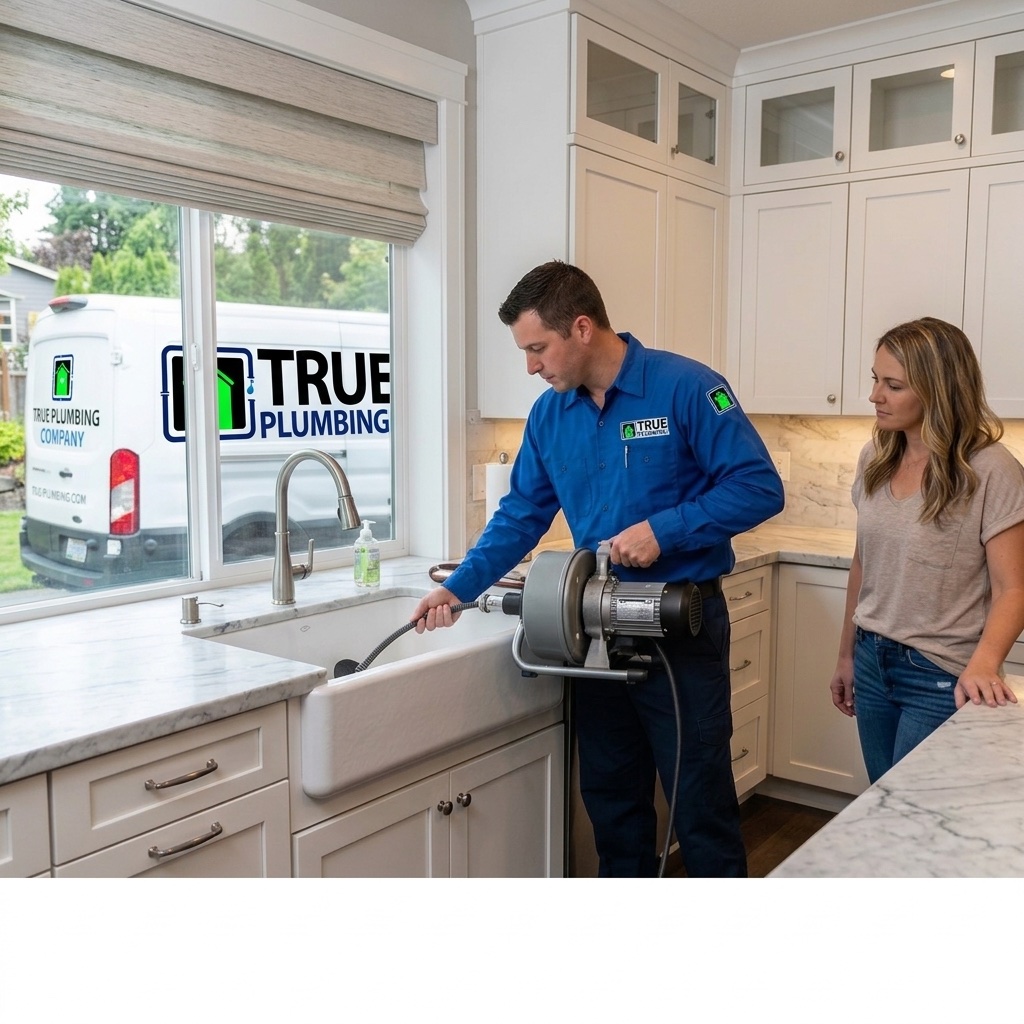
If the slow drain keeps coming back, or more than one fixture is involved, stop trying to force it. Gurgling sounds or a sewage smell are also signs the blockage sits deeper than home tools can reach. A plumber can put a camera in the line to find the exact spot and clear it before it turns into a backup.
If a quick cleanup does not fix one fixture, compare safe DIY tools with professional clearing. If the problem involves several fixtures or keeps returning, the guide to snaking versus hydro jetting explains the next diagnostic questions.
True Plumbing can inspect the line and recommend the appropriate drain-cleaning service. Call (360) 207-6064 to confirm availability.