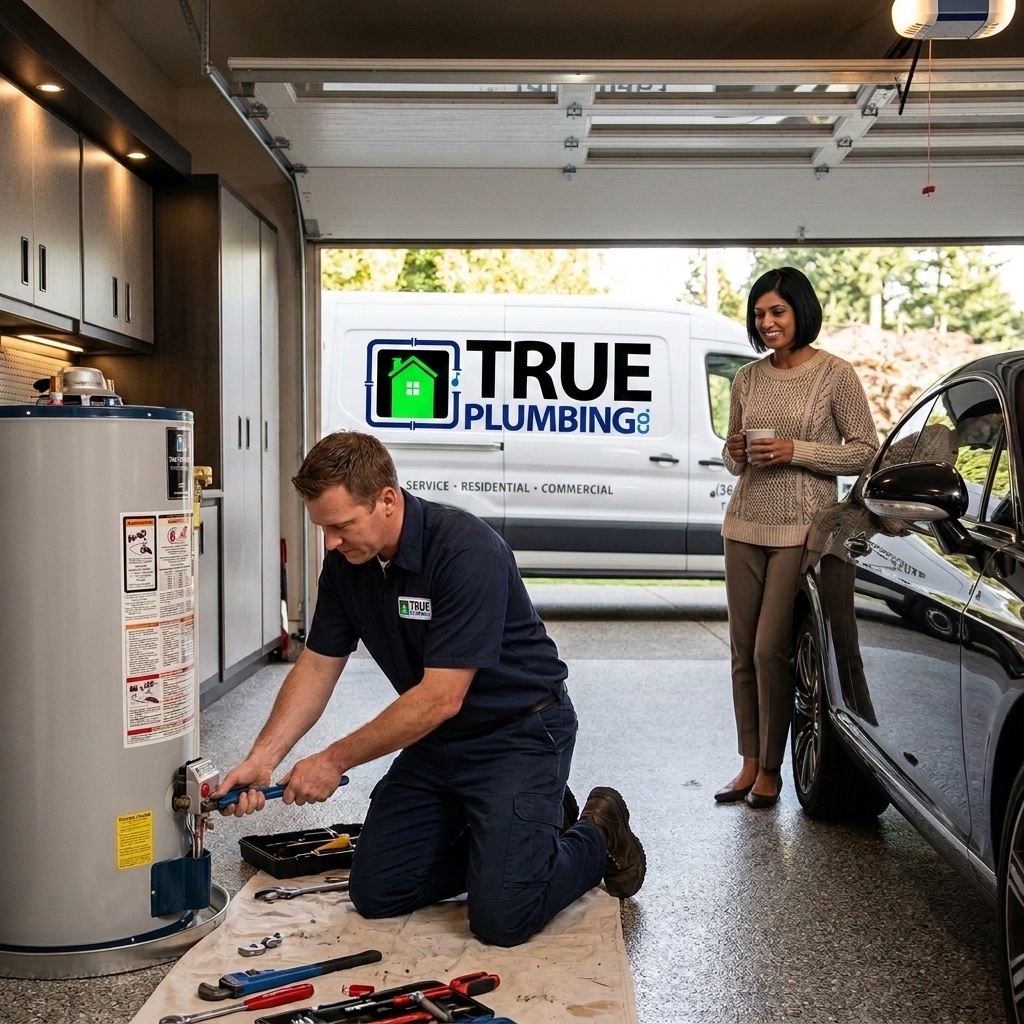
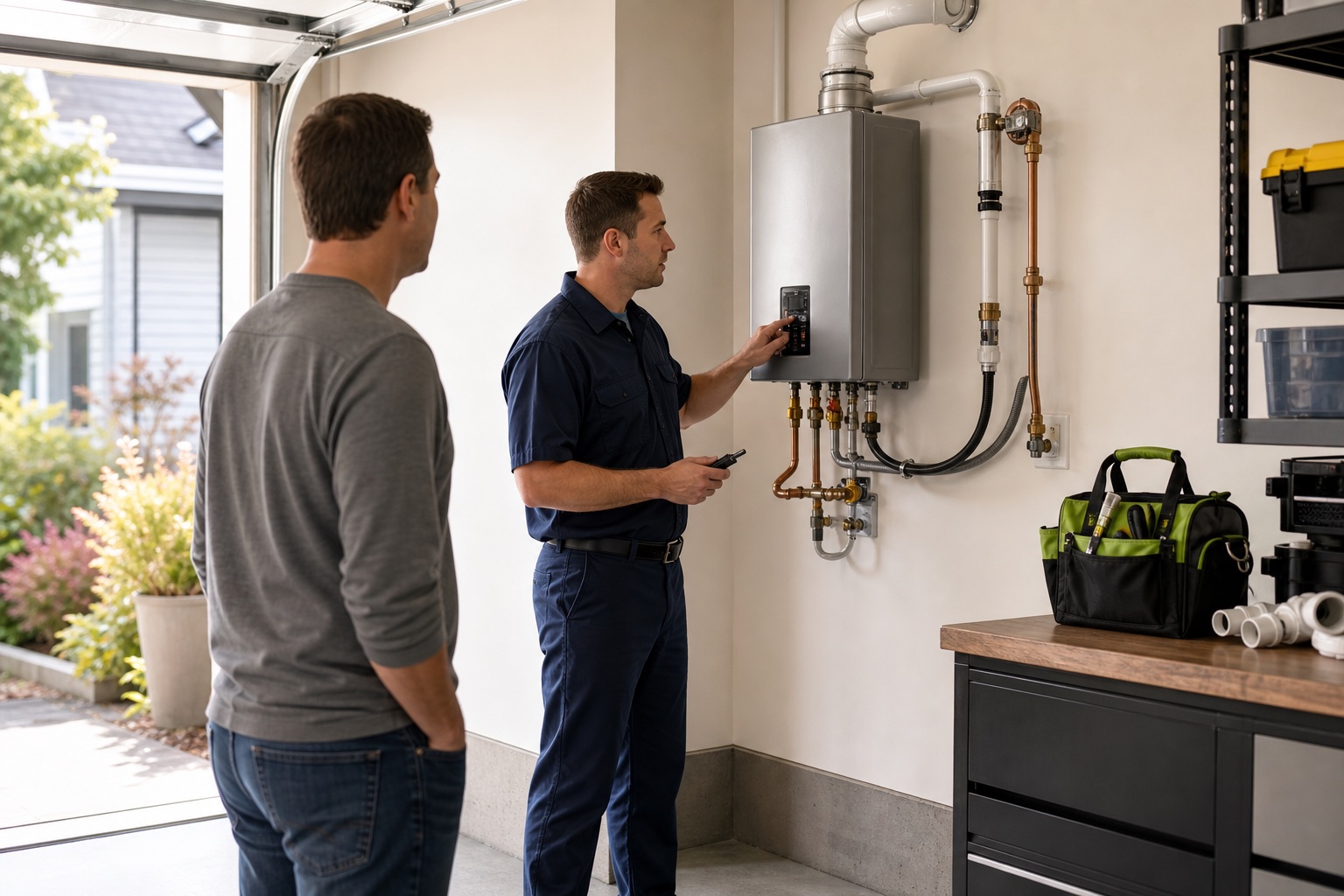
A standard tank keeps 40 or 50 gallons of water hot around the clock, whether or not anyone is home to use it. A tankless unit works differently: it heats water only as it flows through, the moment you open a hot tap.
Sizing and gas supply decide whether tankless delivers on these advantages, which is exactly what our tankless installation team checks before quoting anything.
1. Hot water that doesn't run out
A tankless heater can keep supplying hot water without waiting for a storage tank to recover. The limit is how much hot water you use at once. Several fixtures can exceed one unit's output; an installer needs to check peak demand and the temperature rise before choosing equipment. ENERGY STAR's buying guidance makes gallons per minute, gas supply, and venting part of that assessment.
2. It frees up floor space
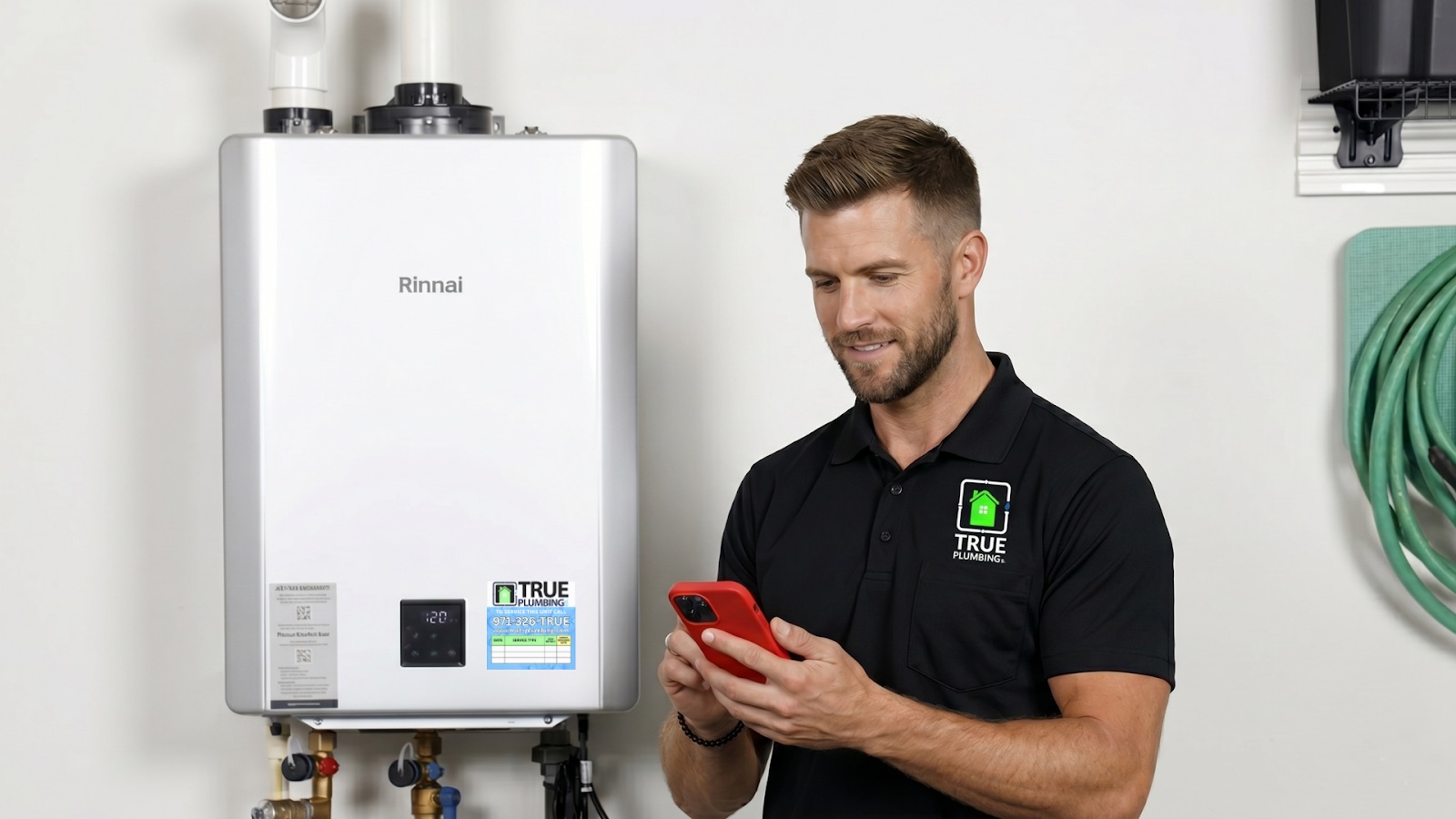
A wall-mounted tankless unit can free up the floor area occupied by a storage heater. ENERGY STAR identifies this as a benefit of gas tankless models. Before planning shelving in that space, have the installer confirm the selected model's service access, clearances, and vent route.
3. Longer lifespan
ENERGY STAR lists a 20-year life expectancy for gas tankless heaters. Rinnai describes its own units as lasting up to 20 years, depending on water quality, use, and maintenance. Those are planning estimates. When comparing quotes, check the actual model's warranty and maintenance requirements alongside the purchase price.
4. Lower standby energy loss
A storage heater uses energy to keep its reserve hot between uses. A tankless unit heats water as needed, avoiding that stored-water standby loss. ENERGY STAR explains how the gas burner and heat exchanger respond to water flow. Your bill still depends on the model, fuel price, and how much hot water your household uses.
5. No large storage tank to leak
Removing the storage tank removes that particular source of leaks. The heater and its plumbing still need maintenance. Rinnai calls for periodic filter checks and flushing to manage debris and scale, with the interval affected by water quality. Ask what servicing your selected model needs before buying it.
Heats a reserve of water.
Capacity starts with the stored supply.
Heats water as it flows.
Capacity depends on output at the required temperature rise.
When a tank still makes more sense
If a working tank meets your needs, compare the full conversion quote with the benefit you expect. A gas tankless conversion may need gas-line, venting, or electrical work. Ask for those costs and ongoing maintenance in the estimate. When keeping installation work and upfront spending down matters most, a suitable tank replacement may be the better fit.
Tankless questions before you choose
Does tankless mean instant hot water at the tap?
Can one tankless heater supply two showers?
How often does a tankless heater need flushing?
What should a gas tankless conversion quote include?
Before choosing equipment, compare these benefits with the repair-or-replace factors for the existing heater and the maintenance each system requires.
The best choice comes down to hot-water demand, available utilities, installation scope, and budget. True Plumbing can quote a tankless conversion and a straight water-heater replacement for the same home. Call (360) 207-6064 to confirm availability.