Commercial leak detection starts by separating expected water use from water escaping the system, then locating the failed section before choosing a repair. For a property manager, the first useful step is to gather meter readings and operating schedules. A higher bill or an overnight flow alert can justify an investigation, but neither identifies which pipe needs work.
If water is actively spreading, arrange help now rather than waiting for a meter test. Keep people out of the affected area. OSHA's flood-response guidance warns against entering flooded areas or touching electrical equipment when the ground is wet. Have qualified personnel handle electrical hazards; don't cross standing water to reach a valve or panel.
Check water use before blaming a hidden pipe
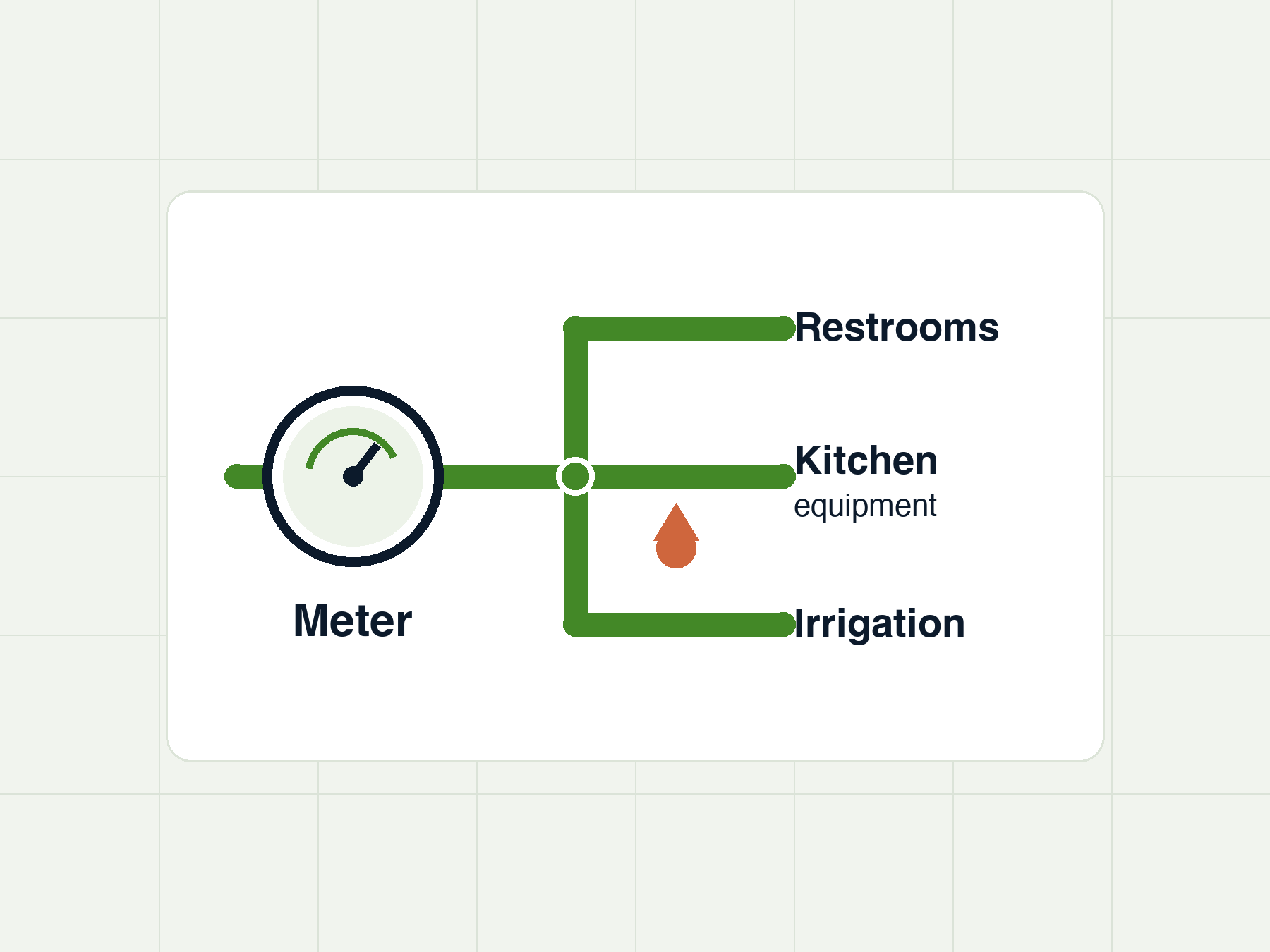
Pull the consumption figures from the bill, along with the meter number and billing dates. Compare gallons or cubic feet per day so a longer billing period doesn't look like a sudden change. Then note anything different about the business: a new tenant, longer opening hours, irrigation changes, or added equipment. Send that short explanation with the readings.
Walk through accessible areas with the person who maintains the building. Look for running fixtures, unexpected discharge into floor drains, and wet ground around the property. EPA's commercial leak-detection guide recommends checking water-using equipment as well as the piping. A fault at an appliance deserves attention even when the walls and floors look dry.
Make an after-hours meter check mean something
An empty building can still use water. Write down the scheduled equipment cycles before interpreting an overnight reading. Ask facilities staff which uses can pause safely for a test; don't turn unfamiliar valves or interrupt equipment on your own.
More about Make an after-hours meter check mean something
When every water use can safely stop, EPA recommends reading the meter, waiting an hour with no water use, and reading it again. Movement suggests a possible leak. Record both readings, the units, and the start and end times. If equipment must keep running, document it and ask the plumber how to separate that demand from unexplained flow.
A simple log makes the call more useful:
- Which meter you read and which building or units it serves.
- Starting and ending readings, with photos taken from a safe position.
- Any equipment or fixtures operating during the check.
- Where someone saw water, heard running water, or noticed a change, with the time it happened.
Match the evidence to the next step
| What you found | What to arrange |
|---|---|
| The invoice increased, but daily water use stayed similar. | Ask the utility to explain the billing change before booking a hidden-leak search based only on the dollar amount. |
| Unexplained flow continues during a controlled check. | Request leak investigation and give the plumber the equipment list and meter log. |
| One fixture visibly runs or drips. | Describe that fixture when requesting service, then compare readings after the repair. |
| A wet area appears intermittently. | Record when it happens and what was running. Ask for an investigation that covers that timing, even if one quiet-period meter check shows no movement. |
Ask how the plumber will narrow the location
A useful diagnostic scope names the system under investigation and the evidence needed before opening a wall or excavating. Bring available plans showing meter locations, branch piping, and valves. Tell the plumber which tenant spaces require access arrangements and who can approve an interruption.
More about Ask how the plumber will narrow the location
The Department of Energy's distribution-system guidance describes acoustic detection: escaping water creates sound that travels through the pipe. Pipe materials carry that sound differently, so ask which method suits your system. DOE also describes using correlators and ground microphones to narrow leak locations.
Ask what the proposed test can establish, what remains uncertain, and whether a second visit or another specialist could be necessary. Detection and repair should each have a clear scope. A marked location should lead to a discussion of access and repair options, not an open-ended approval to replace piping.
For the service itself, see True Plumbing's leak detection and repair page. If the main symptom is a drain backup, describe that when you call so the team can assess the appropriate sewer and drain work.
Confirm the visit scope and the shutdown plan
Before approving the visit, ask for a written scope that answers these questions:
More about Confirm the visit scope and the shutdown plan
- Does the quoted work include detection only, or any repair?
- Which areas need access, and who will arrange it with tenants?
- Will the work interrupt water service, and who will coordinate the interruption and restart?
- What happens if the first visit doesn't locate the problem?
- Who handles opening and restoring walls, flooring, or paving if the repair requires access?
Confirm the appointment window and any conditions that could change the price. For multi-unit properties, designate one contact who can authorize the agreed work and reach the affected occupants. Keep the diagnostic notes with the repair invoice so a future manager can understand what happened.
Keep meter units and utility boundaries straight
Use the provider named on the property's bill. For example, the Portland Water Bureau's meter guide explains that a CCF means 100 cubic feet, or 748 gallons. A change of one CCF therefore isn't a one-gallon change. Check the units printed on your own meter and bill before sharing a loss estimate.
Portland's guide also explains that an isolation test depends on a shutoff that actually works. In a commercial building, have the plumber establish which branches and shared services a valve controls before drawing conclusions from that test. Confirm responsibility for the affected line with the serving utility; a nearby city name isn't enough.
Choose monitoring that answers the right question
A moisture sensor reacts when water reaches its location. A flow monitor watches water moving through a pipe and can flag unusual use. EPA explains both approaches and notes their use in commercial and multifamily buildings. They provide different evidence, so choose around the problem you need to catch.
More about Choose monitoring that answers the right question
Before buying a system, decide who receives an alert and who can respond when the building is closed. Ask about coverage, testing, maintenance, and what happens during a communications failure. If automatic shutoff is part of the proposal, have the building's qualified service providers review which supply it controls and how affected equipment will restart.
After a repair, compare readings under similar operating conditions and keep the new baseline. Give staff a clear way to report another change.
Commercial leak detection questions
Does water use after closing prove there is a leak?
It proves that the meter recorded use. Check equipment schedules and any occupants still using the building, then investigate the part of that use you can't explain.
More about Commercial leak detection questions
Can a leak alert show exactly where to dig?
A flow alert identifies a change in use. Ask for location evidence and a repair scope before approving excavation.
What should I send before the appointment?
Send the property address, meter readings with times and units, an equipment schedule, and photos of the affected area. Identify the access contact and any limits on water interruptions.
Can True Plumbing assess our commercial building?
True Plumbing works with businesses and property managers. Call with the address, building type, and symptoms to confirm the service scope and appointment availability.
Review commercial plumbing services and the current service-area guide, then call (360) 207-6064 or request service through True Plumbing. Start with what you observed and what the building needs to keep operating.