Repiping is one of those projects most homeowners put off until a pipe forces the decision. The better time to evaluate it is before the next failure, when you can compare a focused repair with a planned project and understand what is actually inside the home.
Signs your home is ready for a repipe
A single leak usually means a single repair. A pattern is what points toward repiping. Discolored or rusty water, repeated leaks in different areas, and pressure that has gradually declined are all reasons to inspect the distribution piping. A known older or mixed-generation system is another reason to understand the condition before the next failure chooses the timing for you.
Low pressure does not prove that the house needs new pipes. A regulator, service line, meter, utility supply, fixture aerator, or simultaneous demand can create the same symptom. The useful question is whether the restriction is inside the home's distribution piping or somewhere upstream.
What pipe materials are common in Clark County homes?
Clark County has pockets of old and new construction throughout the county, so the city name does not reliably predict the pipe material. Tyler commonly sees galvanized piping in many 1960s-era homes, copper in many homes from the 1970s and 1980s, CPVC in portions of 1990s through early-2000s construction, and PEX increasingly often in newer construction. These are field tendencies, not universal construction rules.
Remodels and additions can leave several materials in one home. The year a house was built can help form the first question, but the actual pipe and fittings still need to be seen or verified before a repipe is scoped.
How to inspect the system without opening walls
Start with safely accessible areas. Look near the water heater, utility area, crawlspace, or main shutoff for visible pipe and fittings. Take clear photographs without removing insulation, cutting drywall, or disturbing a connection. Note where leaks have repeated, whether water looks discolored, and whether pressure or flow changes when more than one fixture runs.
Those observations help the plumber plan the visit, but they do not replace verification. Concealed branches, additions, and transitions can contain different materials than the section that is easiest to see. The plumber should confirm the hidden and mixed-generation portions before recommending a whole-home replacement.
The best times to repipe
You can repipe a house at any time, but a remodel is often the least disruptive window. If walls, floors, cabinets, or ceilings are already open, an accessible section can be replaced without paying to create the same access twice. A repeat leak pattern can also justify planning before the next emergency, while a home sale may be a reason to document the plumbing honestly rather than rush into work that has not been scoped.
The right timing depends on the condition and access, not on a calendar rule. A single sound section may need only a repair. A house with recurring failures across different areas may benefit from a planned project.
Why PEX for repiping?
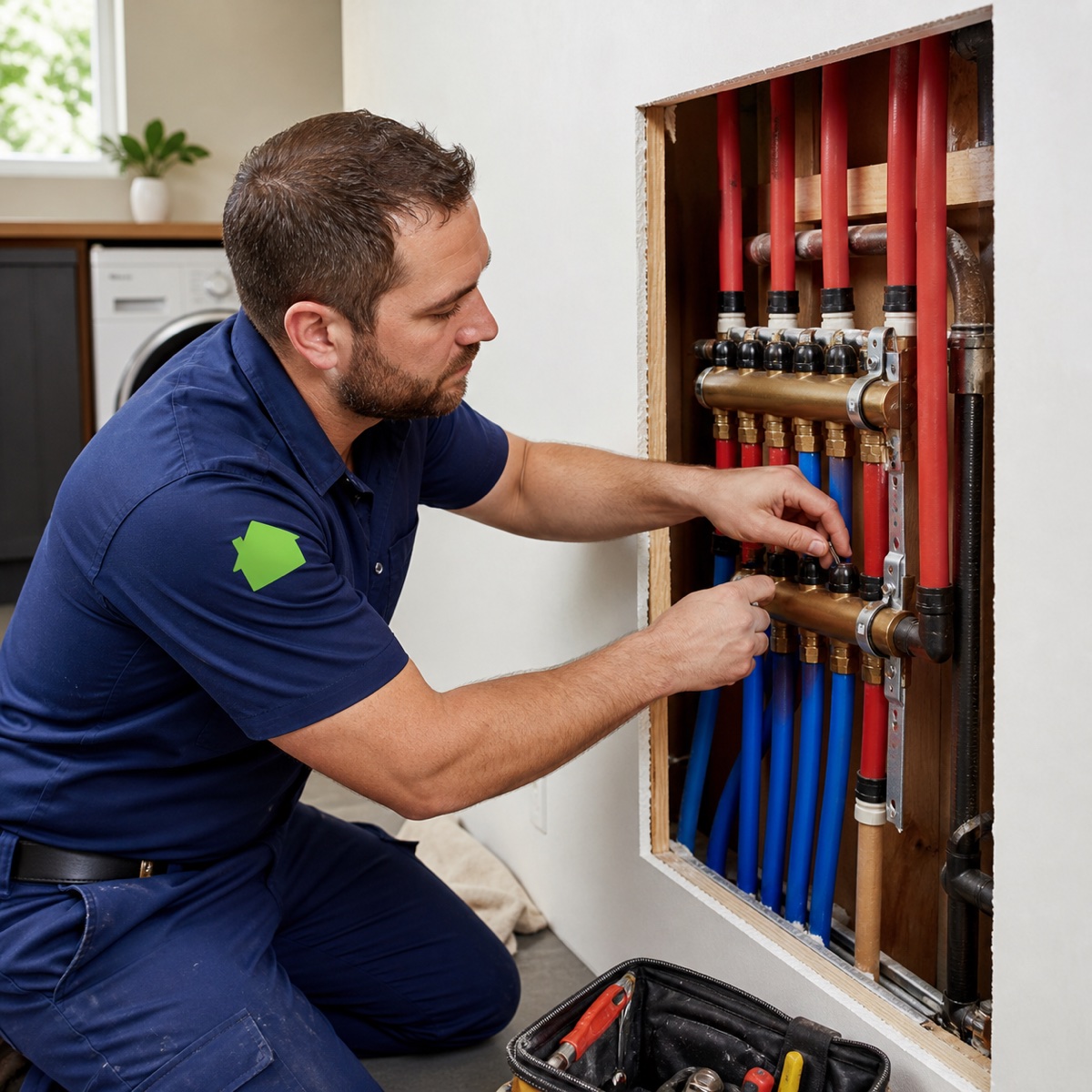
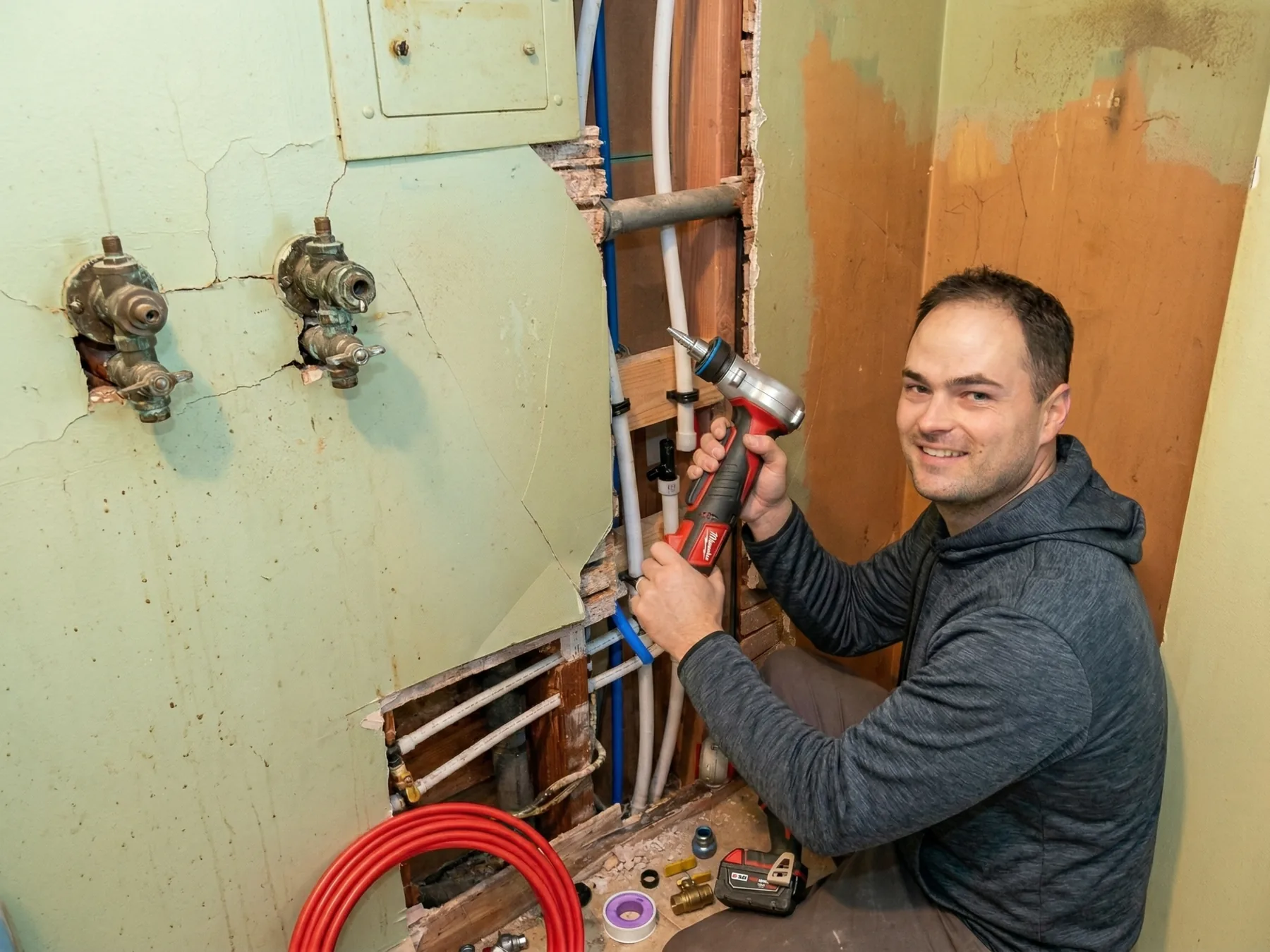
PEX is increasingly common in newer Clark County construction and is the material currently described on True Plumbing's repiping page. It is flexible and can simplify routing through an existing home, but the replacement material, sizes, connections, support, and protection still need to be stated in the written scope. No single system automatically fits every home, and proper installation remains important in any climate.
What to expect
Most whole-home repipes take a few days, but the actual calendar depends on home size, layout, access, mixed materials, permits, inspections, and finish work. A good crew plans the sequence, protects your floors and belongings, explains water-off windows, and states who handles each access opening and restoration step. You should have the price and scope in writing before anything starts.
Before deciding, compare a repeating leak pattern with the signs of one hidden failure. If walls will already be open, coordinate the work using the renovation water-line checklist.
True Plumbing can inspect the pipe material and scope a targeted repair or whole-home repipe. For timeline questions, read how a whole-house repipe is scheduled, then call (360) 207-6064 to confirm availability.