There is no honest one-number answer for every whole-house repipe. The working schedule depends on the size and layout of the home, the materials already in the system, how easily the existing pipes can be reached, the permit and inspection path, and whether wall repair is included in the plumbing scope.
The useful question is not only how many calendar days the project takes. Ask how many days plumbers will be inside the home, when water will be unavailable, which surfaces need access, and who is responsible for closing and finishing those openings.
What determines the repipe timeline?
A compact home with accessible plumbing can be planned differently from a multistory house with finished walls, additions, or several bathrooms. The pipe route matters as much as square footage. A plumber needs to understand where the supply enters the home, how branches reach each fixture, and where new lines can be installed with the least unnecessary disruption.
Permits and inspections can also affect the calendar. The City of Vancouver publishes residential building and plumbing permit information, while Washington State Labor & Industries explains plumbing licensing and permit responsibilities. Your proposal should state whether the contractor is handling those steps and whether inspection timing is included in the schedule.
If you are still deciding whether the project is necessary, start with the signs that point to whole-home repiping. A single isolated leak may call for a focused repair, while repeated failures in different areas can make a larger replacement plan more reasonable.
What happens before the first workday?
A useful repipe plan begins before any wall is opened. Clark County has pockets of old and new construction throughout the county, and a single home can contain galvanized, copper, CPVC, and PEX after additions or remodeling. Tyler commonly sees galvanized piping in many 1960s-era homes, copper in many homes from the 1970s and 1980s, CPVC in portions of 1990s through early-2000s construction, and PEX increasingly often in newer construction. Those observations help frame the inspection, but they do not replace it.
The plumber should identify visible pipe near the water heater, utility area, crawlspace, or shutoff, map the fixture branches, note difficult access areas, and verify concealed materials before the scope is set. A homeowner can photograph visible pipe and fittings without opening walls, then note repeated leaks, discoloration, or pressure and flow symptoms. This is also when the contractor can separate plumbing work from drywall, paint, cabinet, tile, or flooring restoration.
If a kitchen or bathroom renovation is already planned, coordinating the projects can reduce duplicate access work. Our renovation water-line guide explains what to confirm before walls and floors are closed again.
How are water shutoffs planned?
A repipe involves shutting off water while old and new connections are changed and tested. That does not tell you how long every interruption will last. The crew should explain the expected water-off windows, which fixtures will be affected, and whether water is expected to be restored between work periods.
Ask for that schedule in writing if someone in the home works remotely, has mobility needs, uses medical equipment, or cannot easily leave during an interruption. Planning the water-off periods is part of planning the project, not a detail to discover after work begins.
What does access and restoration involve?
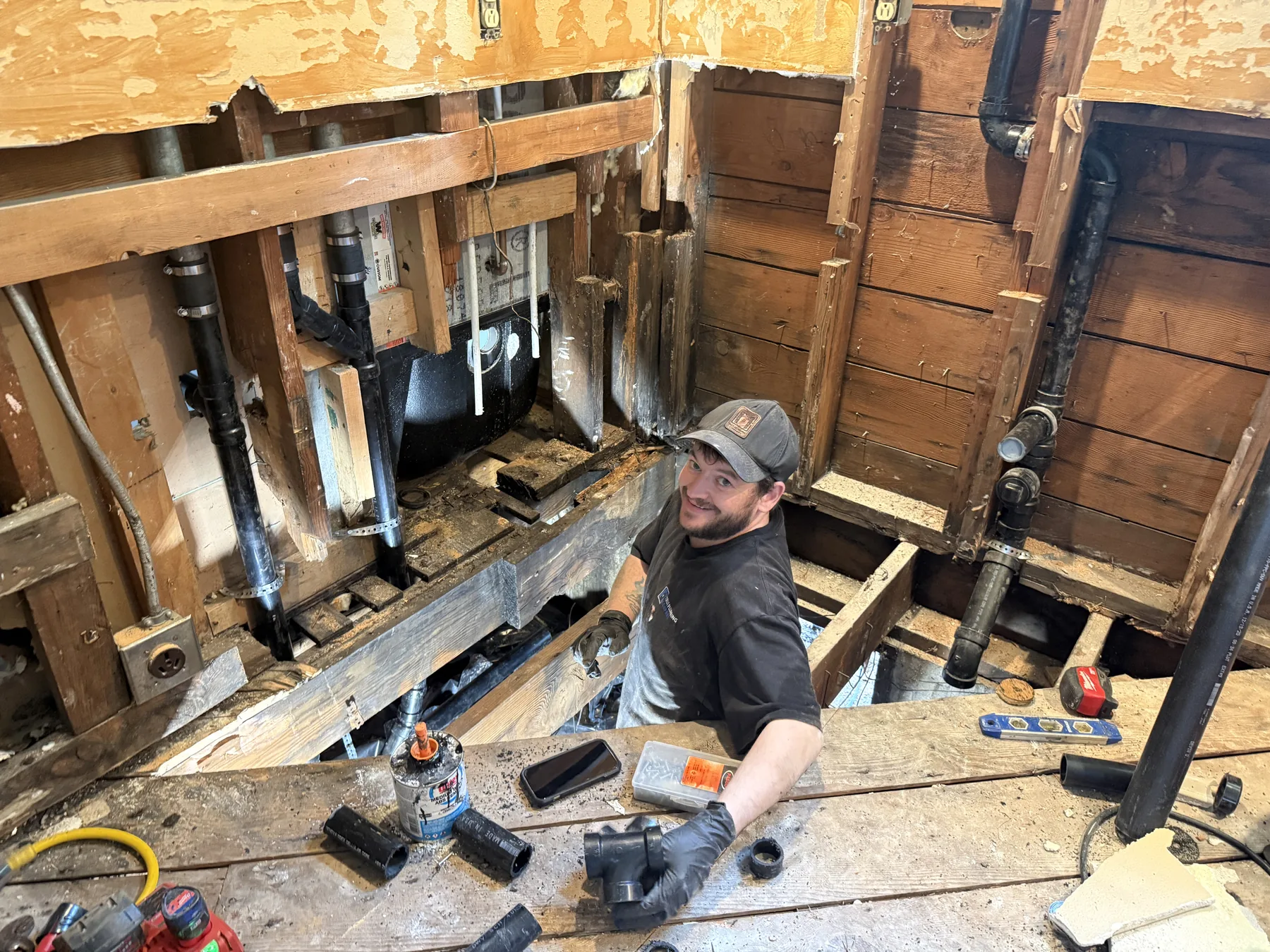
New supply lines often require access through selected walls or ceilings. The number and size of openings depend on the route. A clear proposal should say who creates the access, how the home will be protected, which openings the plumbing crew closes, and whether final texture and paint are included.
Restoration can make the total calendar time longer even when the plumbing portion is complete. Keep the plumbing schedule and finish-work schedule separate so you know when water service is restored and when the room will look finished again.
What should a written repipe proposal answer?
- Which pipes and fixtures are included, and which are excluded?
- What pipe material and routing plan will be used?
- Who obtains permits and schedules required inspections?
- What are the expected workdays and water-off windows?
- Where will access openings be made, and who handles restoration?
- How will the new system be tested before the project is considered complete?
Those answers are more useful than a timeline given before anyone has inspected the home. They also make it easier to compare proposals on scope rather than price alone.
When is a targeted repair still the better choice?
Repiping is not the automatic answer to every leak. One failed fitting, a localized damaged section, or a fixture connection may be repairable without replacing the supply system. Low flow may also come from the service line, regulator, meter, utility supply, or fixture rather than the distribution piping. If the warning signs are hidden, review how to spot a concealed water leak before assuming the whole house needs new pipe.
True Plumbing can inspect the material, layout, leak history, and access conditions before recommending a repair or a whole-home repipe in Vancouver. Call (360) 207-6064 to confirm availability and ask what the written scope will include.