A plunger may be enough for an isolated clog when no chemical cleaner is in the drain. Call a plumber if the blockage resists a careful attempt, returns, or affects several fixtures. Sewage backing up into the home is a reason to stop using the affected plumbing and get help.
Check the tool instructions. A plunger or suitable hand snake may help.
Avoid splashing or mixing products. Tell the plumber what went into the drain.
Repeated attempts do not establish what is causing the blockage.
Avoid using the affected plumbing. Keep people and pets away from sewage.
Decision guide checked September 9, 2026. Tool precautions: RIDGID; chemical precautions: SC Johnson; sewage risks: EPA. References below.
What DIY tools actually fix
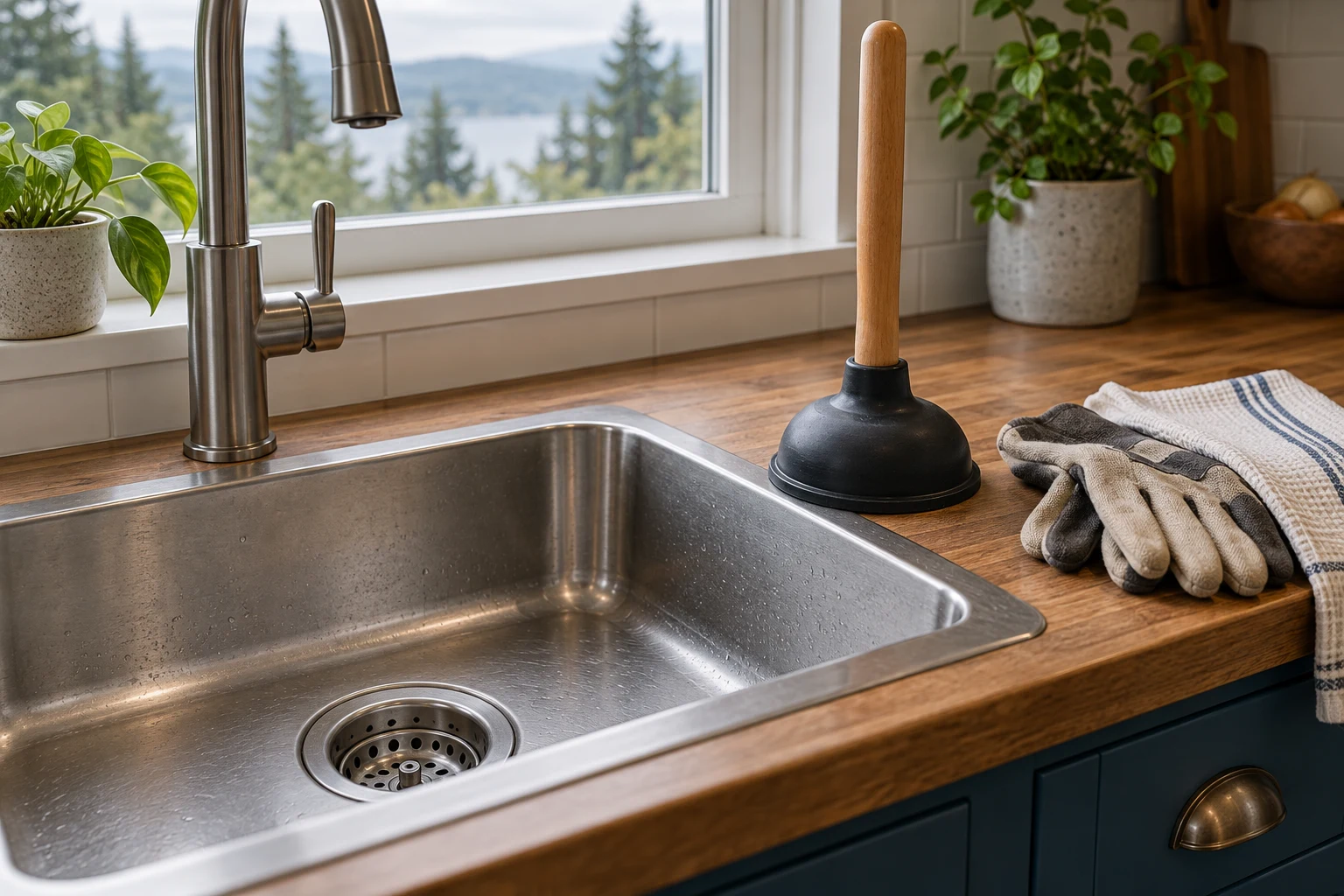
A plunger can be a reasonable first attempt at a single clogged fixture. Use one suited to that fixture and follow its instructions. Check whether anyone has already poured a cleaner into the drain before you start.
A hand snake, also called a hand auger, can reach into a drain to work on a blockage. Match it to the fixture and pipe size instead of choosing by cable length alone. RIDGID's KWIK-SPIN+ instructions, for example, say the tool is not recommended for toilets and warn against forcing the cable. Read the instructions for your exact model and wear the specified eye and hand protection. These tools are reusable, but the wrong tool or excessive force can cause damage.
Leave the chemical drain cleaners on the shelf
For a homeowner choosing a first step, a suitable mechanical tool avoids adding a corrosive product to a blocked drain. Washington Poison Center warns that drain cleaners can cause severe burns. A cleaner that fails to clear the blockage also complicates the next attempt because liquid may remain in the pipe.
SC Johnson specifically says never to plunge during or after using Drano Max Gel and never to mix it with other cleaners or chemicals. If you already used a product, stop, follow its label precautions, and tell the plumber its name and when you added it. Do not assume that a product described as safe for pipes is safe to splash on skin.
Signs the job needs a professional
Call when the clog keeps coming back or more than one drain is slow. Report which fixtures are affected and whether using one causes water to appear in another. Those observations help scope an inspection; they do not prove that roots, grease, or a broken pipe are responsible.
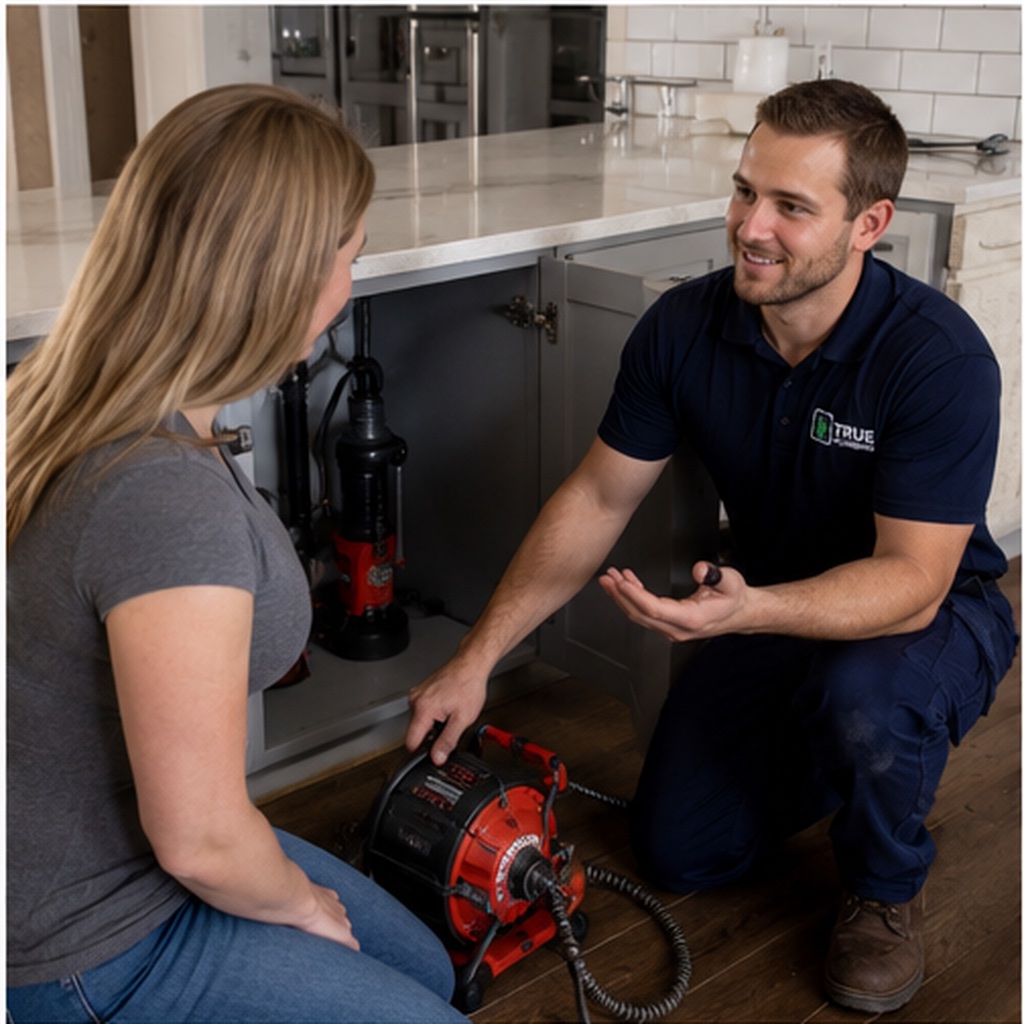
A plumber can choose a drain machine suited to the line and may recommend a camera inspection when the cause needs investigation. Ask what the proposed clearing method can address and whether the pipe's condition needs checking first. Our snaking and hydro jetting comparison explains those options.
If the home uses septic, mention that when booking. EPA lists slow drains and sewage backups among possible signs of septic-system malfunction. And because raw sewage can carry disease-causing organisms, keep people and pets away from a backup while arranging help.
The honest tradeoffs
DIY can save an appointment when a simple clog clears with a tool you already own. Its limit is what you can safely reach and identify. A drain flowing again does not tell you why it blocked or whether the problem will return.
Professional service adds a visit and a charge, but gives you access to equipment and an assessment suited to the problem. Ask whether the quoted work includes clearing, camera inspection, or further investigation, and what happens if the first method does not work. Clearing an obstruction and repairing a damaged pipe are different jobs.
If a clog clears with a plunger and stays gone, monitor it. If it returns, review the materials that commonly rebuild a blockage and the difference between snaking and hydro jetting.
If more than one drain is involved, True Plumbing can inspect the system and recommend the appropriate drain-clearing service. Call (360) 207-6064 to confirm availability.