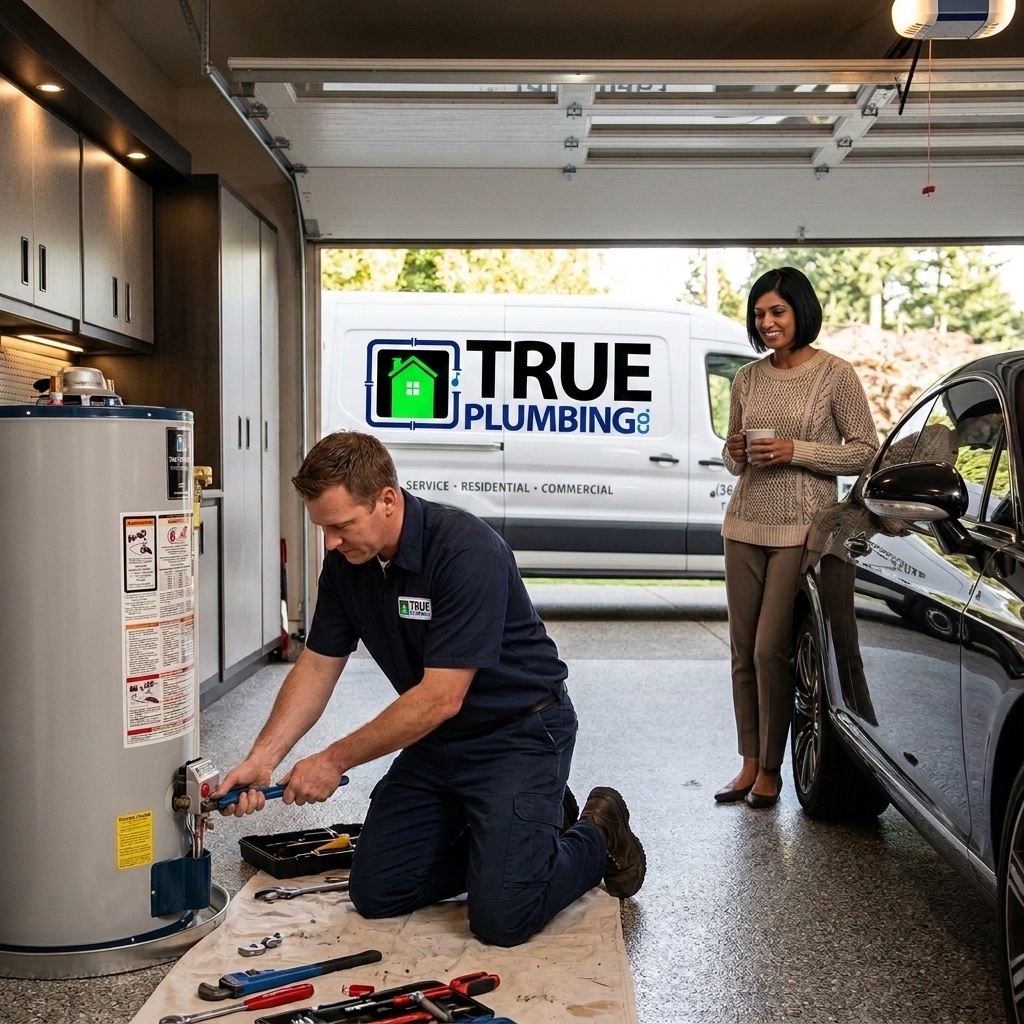
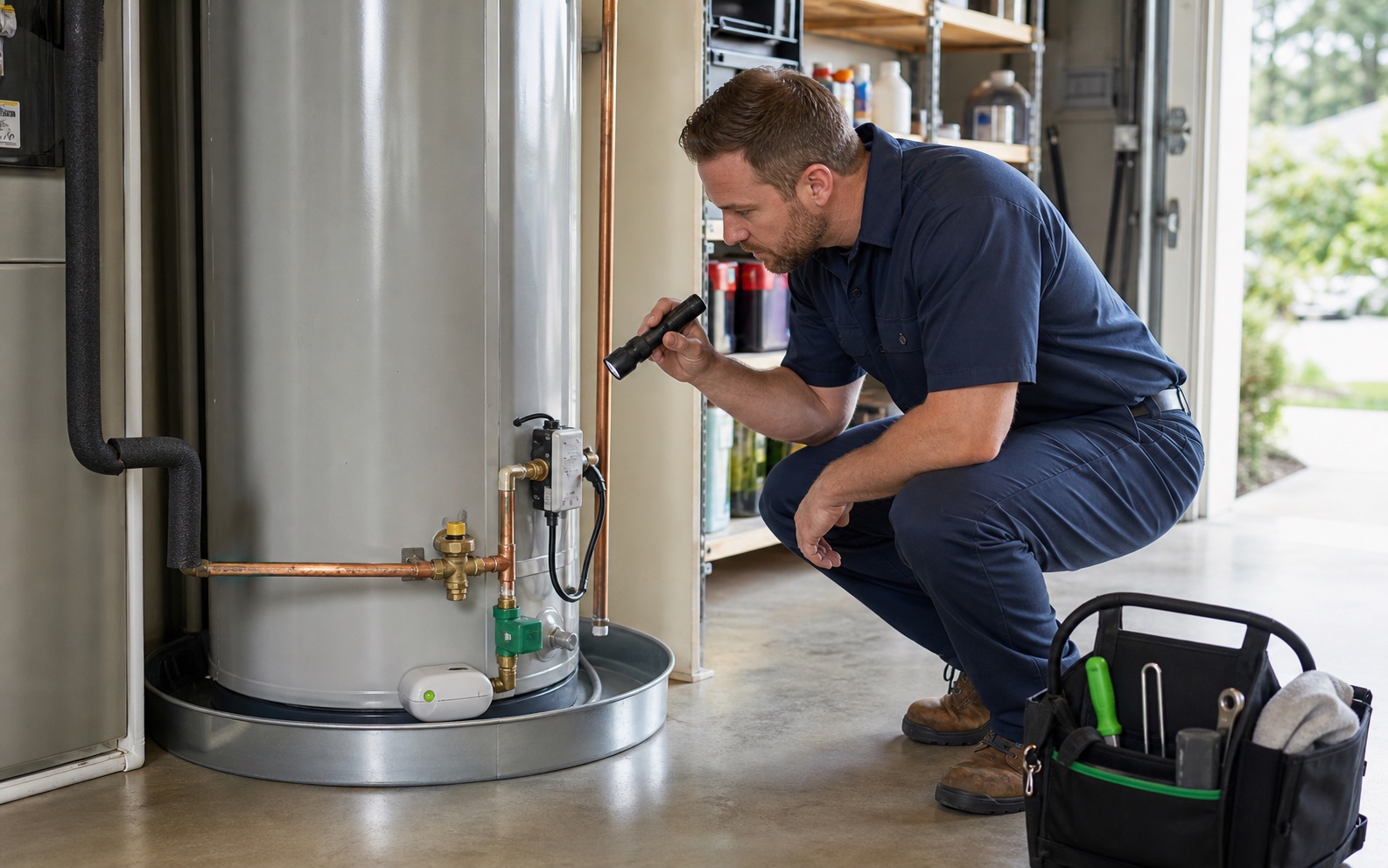
A failed water heater rarely gives much warning before it dumps 40 or more gallons onto the floor, and the cleanup often costs more than the heater did. A little routine maintenance heads off most of those failures.
Moisture at a fitting is repairable. Water pooling at the base of the tank is not. Either way, our repair team can tell you which one you have the same day you call.
Flush the tank to clear sediment
Minerals in your water settle to the bottom of the tank as sediment. Over time that layer traps heat against the steel, makes the burner or element work harder, and speeds up corrosion. Draining and flushing the tank once a year clears it out. One caution: if you have never flushed yours and it is already several years old, go slowly, because stirring up a thick sediment layer can occasionally reveal a leak the sediment was plugging. Better to find that out on a Saturday than at 2 a.m.
Check the anode rod every few years
The anode rod is a sacrificial metal rod inside the tank that corrodes on purpose so the steel tank does not. Once the rod is used up, the tank starts rusting from the inside out. Inspecting it every two to three years and replacing it when it is mostly gone is the single best thing you can do to extend a tank's life. Plenty of heaters that fail early simply had a spent anode rod nobody ever checked.
Test the T&P valve
The temperature and pressure relief valve (the T&P valve) is a safety device that opens if pressure or temperature inside the tank climbs too high. Never cap or plug its discharge line. Follow the manufacturer's manual before testing it: discharged water can cause burns, the pipe must terminate safely, and an older valve may fail to reseat. If the valve leaks, will not operate, or the discharge route is unsafe, stop and call a plumber.
Add an expansion tank and a drip pan
On a closed plumbing system, common where there is a backflow preventer or a pressure-reducing valve at the meter, heated water has nowhere to expand. That drives up pressure and stresses the tank and its connections. A thermal expansion tank absorbs the extra pressure. Separately, a drip pan plumbed to a drain sits under the heater so a slow leak runs to the drain instead of across your floor. If your heater sits above a finished living space, a leak sensor or an automatic shutoff valve is cheap insurance.
Know the early warning signs
Catching a heater on its way out beats cleaning up after it fails. Call a plumber if you notice any of these:
- Rusty or metallic-smelling hot water
- Popping or rumbling sounds while it heats, which usually means sediment
- Moisture, rust, or a chalky mineral crust around the base or fittings
- Hot water that runs out faster than it used to
- Any standing water under the tank, even a little
When to call a pro
Use the manufacturer's manual to decide which maintenance belongs to the homeowner. Leave anode replacement, expansion-tank installation, T&P problems, and gas or electrical work to a qualified professional. If the tank itself leaks or has advanced corrosion, plan for replacement rather than treating it as routine maintenance.
Use the detailed water-heater maintenance safety guide before working on a unit, and review when a repair stops making sense.
True Plumbing can inspect the heater and provide repair or replacement options. Call (360) 207-6064 to confirm availability.