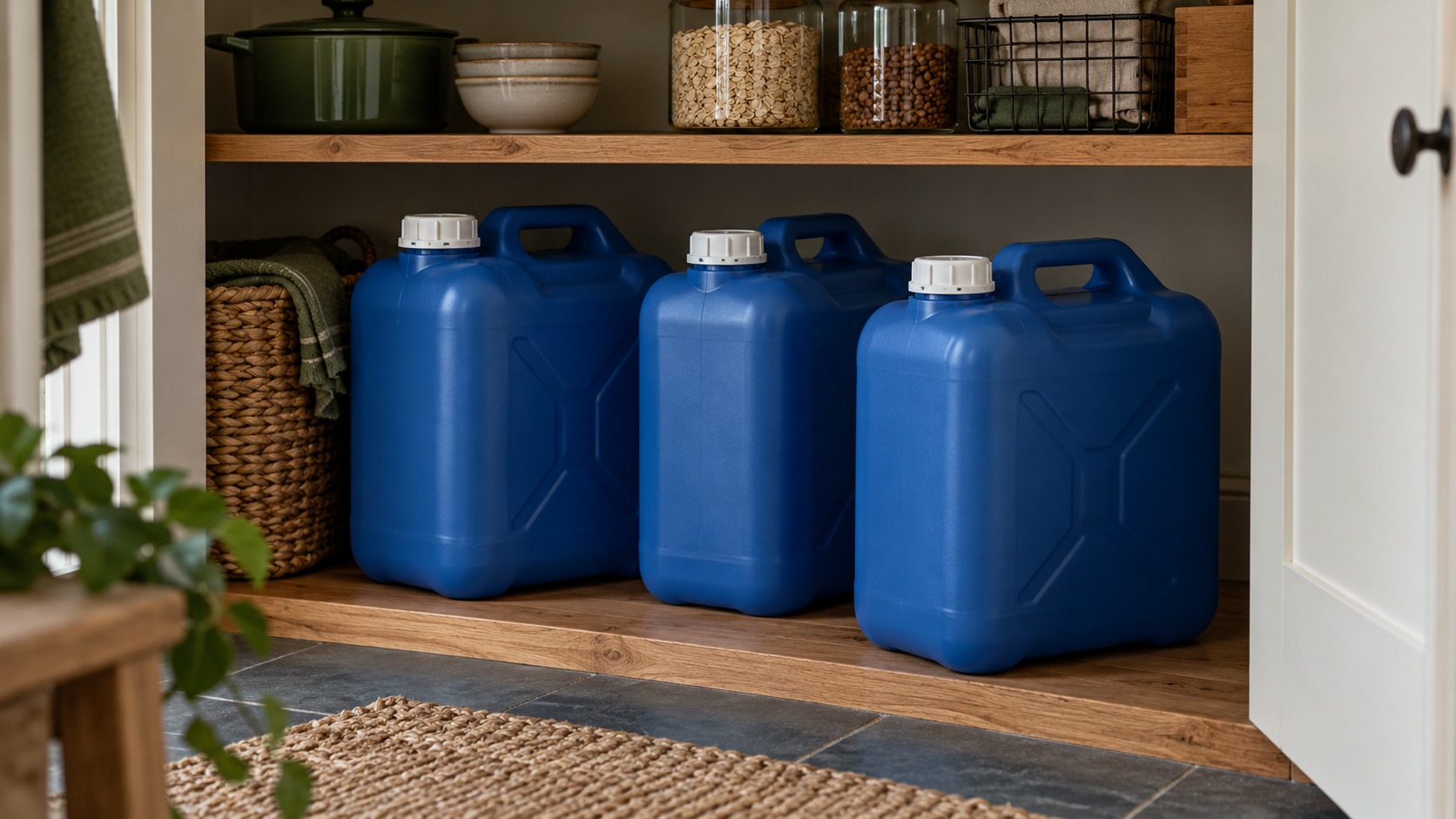
Keep a household water reserve while Bull Run filtration is being built. Portland recommends storing 14 gallons per person, enough for about two weeks. The Water Bureau’s October 9, 2026 construction update explains how future filtration will make the system more resilient. Its current emergency-preparation guidance still asks households to store water.
Use the project update as a reason to check your reserve. Count what you actually have, decide where the rest can fit, and put a rotation date on the calendar. A treatment project under construction does not put water in your cupboard.
What the October update means for your home
The bureau explains that heavy rain can wash dirt, ash and other organic material into reservoirs. Bull Run is currently unfiltered. If enough debris enters the supply, the bureau may need to stop using it until the material settles. The new facility is intended to remove sediment and other potential contaminants, helping the region use Bull Run water after a disaster.
That is a description of system resilience, rather than an outage forecast for your street. Keep following your supplier’s current notices. Check the provider on your bill or ask your building manager; a Portland-area mailing address alone is not a reason to apply another utility’s instructions.
Turn the local target into a household amount
Portland’s 14-gallon target is per person. Write down the number of people who depend on your household supply, including anyone you expect to shelter. Then add water for pets and extra needs. The bureau specifically calls out pregnant people, newborns and people with additional needs.
14 gallons
28 gallons
56 gallons
Basis: Portland Water Bureau household guidance, checked October 28, 2026. Examples multiply 14 gallons per person for about two weeks. Add water for pets and extra needs. These amounts do not provide normal household water use.
Do the inventory in gallons, not by counting containers of different sizes. For example, a two-person household with 10 gallons on hand has an 18-gallon gap against the 28-gallon target, before extras. That is a planning calculation, not an estimate of how long a particular outage will last.
If the full reserve does not fit your budget or space today, choose a first storage location and build toward the target. Check whether you could lift and pour each container before buying more of that size. A smaller container you can use is more practical than a large one you cannot move.
Store it where you can reach it
Portland says a reserve can be spread around the home in accessible, cool, dark locations. Make a simple list of those locations so another household member can find the water. Keep a usable portion somewhere you can reach without moving a roomful of belongings.
CDC’s storage guidance identifies unopened commercially bottled water as the safest, most reliable emergency source. If you fill containers yourself, use food-grade water-storage containers, follow CDC’s cleaning and sanitizing directions, and close them securely. Never reuse a container that held toxic chemicals.
Label home-filled containers with the storage date and replace that water every six months. Follow the expiration date on purchased water. Keep the supply cool, away from sunlight and separate from toxic substances. Put the next replacement date on the same list as the storage locations.
Keep treatment and stored supply as separate jobs
A home filter treats water passing through it; it cannot supply water when the tap stops. Portland’s boil-water advisory guidance also explains that emergency treatment products address different contaminants. Check the exact device’s instructions and follow the utility’s notice. Use boiled or bottled water when that guidance calls for it.
Keep your provider’s contact information and current instructions with the reserve list. For a separate household plumbing question, such as locating the home’s shutoff or understanding installed treatment equipment, contact True Plumbing with your address and equipment details to confirm coverage and available work. Check the service-area guide when preparing that call. Our plumbing emergency guide covers first steps for a problem inside the home; our filtration and softener guide explains routine treatment questions.
Questions about your reserve
How much emergency water should a Portland household store?
Portland recommends 14 gallons per person for about two weeks. That means 28 gallons for two people or 56 for four, before adding water for pets and other needs.
Can I reduce my reserve because Bull Run filtration is being built?
Keep using the Water Bureau’s household storage guidance. The October 9 update describes a facility under construction that will improve system resilience; it does not announce a smaller household reserve.
How often should I replace water I store myself?
CDC says to replace home-filled stored water every six months. Label containers with the storage date. Follow the expiration date on commercially bottled water.
Does a home filter replace stored water during an outage?
A filter needs water to treat. Keep a stored supply for an interruption. If the utility issues an advisory, follow that notice and the treatment device’s specific instructions rather than assume a filter makes all water safe.