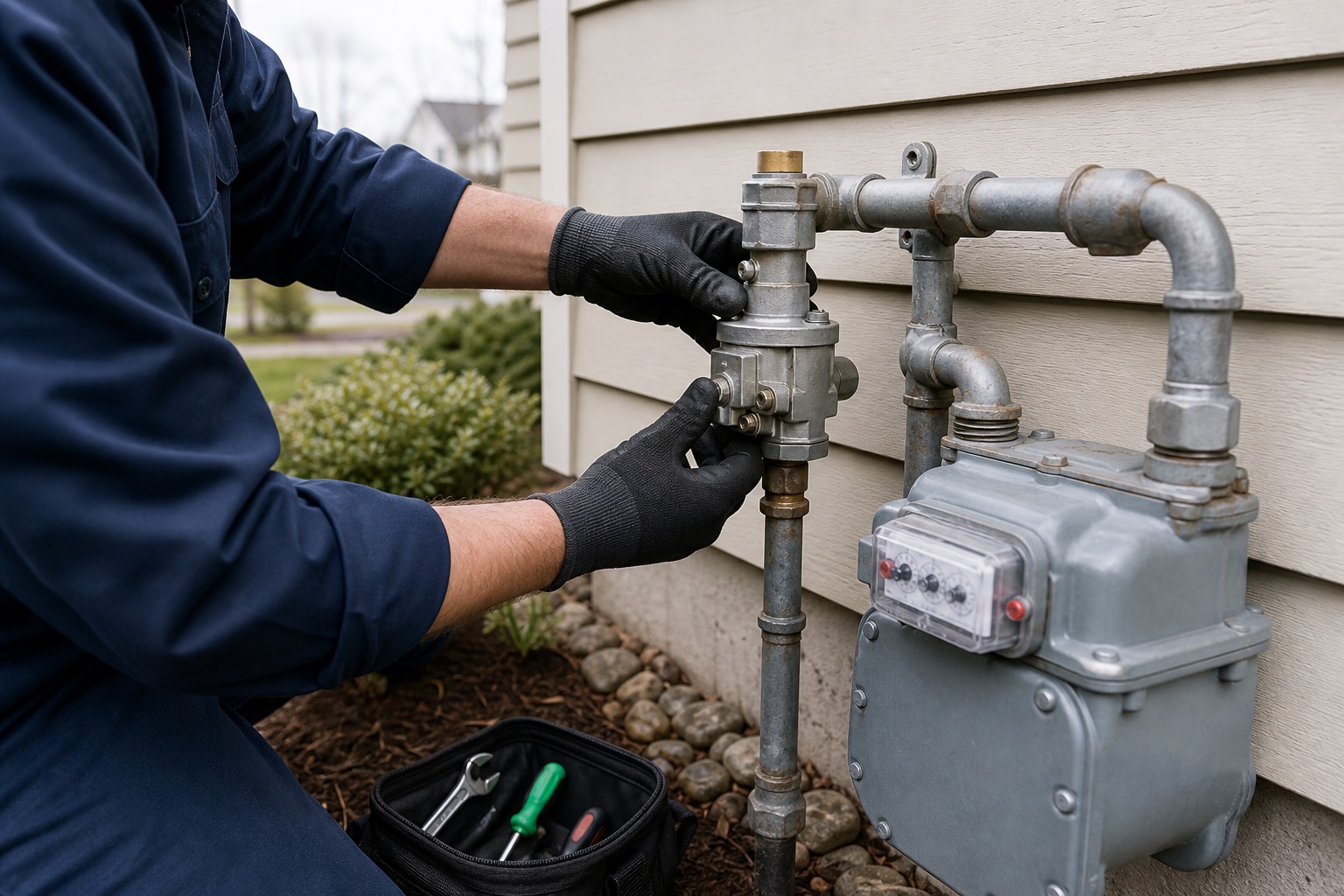
After a strong earthquake, one of the biggest fire risks in a home is a broken gas line nobody knew about. A seismic gas shut-off valve is built to handle that exact problem.
A seismic shutoff valve can be added during any other gas work. Our licensed gas team installs them across Clark County.
What a seismic gas shut-off valve does
This device installs on your gas line, usually just downstream of the meter. Inside is a small metal ball held in position during normal use. When ground shaking reaches a set intensity, the ball drops and closes the valve, cutting gas flow to the house. It works whether or not anyone is home, and it needs no electricity to operate.
Once it trips, the valve stays closed until it is evaluated and reset under the utility, manufacturer, and local requirements. Do not reset it when there is a gas odor or suspected damage. A qualified professional can determine whether the system needs a leak check before service is restored.
Why earthquake risk matters in the Pacific Northwest
Southwest Washington and the Portland metro sit near the Cascadia Subduction Zone, a fault capable of producing a large earthquake. Smaller quakes happen around the region more often than many homeowners realize. When the ground moves, gas piping can crack at a joint or pull loose from an appliance, and escaping gas near any spark becomes a serious fire hazard.
The manual shut-off at your meter only helps if you are home and able to reach it with a wrench during the emergency. An automatic valve removes that dependency.
Signs it is worth installing one
A few situations make a seismic valve especially worth considering:
- Your home relies on natural gas for heat, hot water, cooking, or laundry.
- The house is older and may have aging gas piping or connections.
- You are often away, or someone at home could not safely reach the meter in an emergency.
- You are already remodeling or replacing gas appliances, so the line is open anyway.
- An insurer or a future buyer has asked about earthquake safety features.
Why this is a licensed job
Gas work is regulated for good reason. The valve has to be sized to your line and mounted where it can sense shaking in the correct orientation. After installation, the line needs a pressure test to confirm there are no leaks, and your city may require a permit and inspection. A licensed plumber handles that and documents the work. They can also show you how to reset the valve safely after it trips, and when to call for a leak check instead of resetting it yourself.
Installing a gas valve yourself, or hiring someone without a license, risks a leak that defeats the entire purpose of the device.
If you smell gas, leave immediately
Do not use switches, phones, flames, vehicles, or anything that could create a spark, and do not search for the source. From outside and away from the odor, call 911 and the serving gas utility. Stay outside until emergency responders say it is safe to return.
After a significant earthquake, follow utility and emergency guidance before touching gas equipment. Review the broader first-minute emergency steps and the materials and testing used in modern gas work.
A valve must match the line, installation requirements, and local code. True Plumbing can evaluate it within a broader licensed plumbing scope. Call (360) 207-6064 to confirm availability.