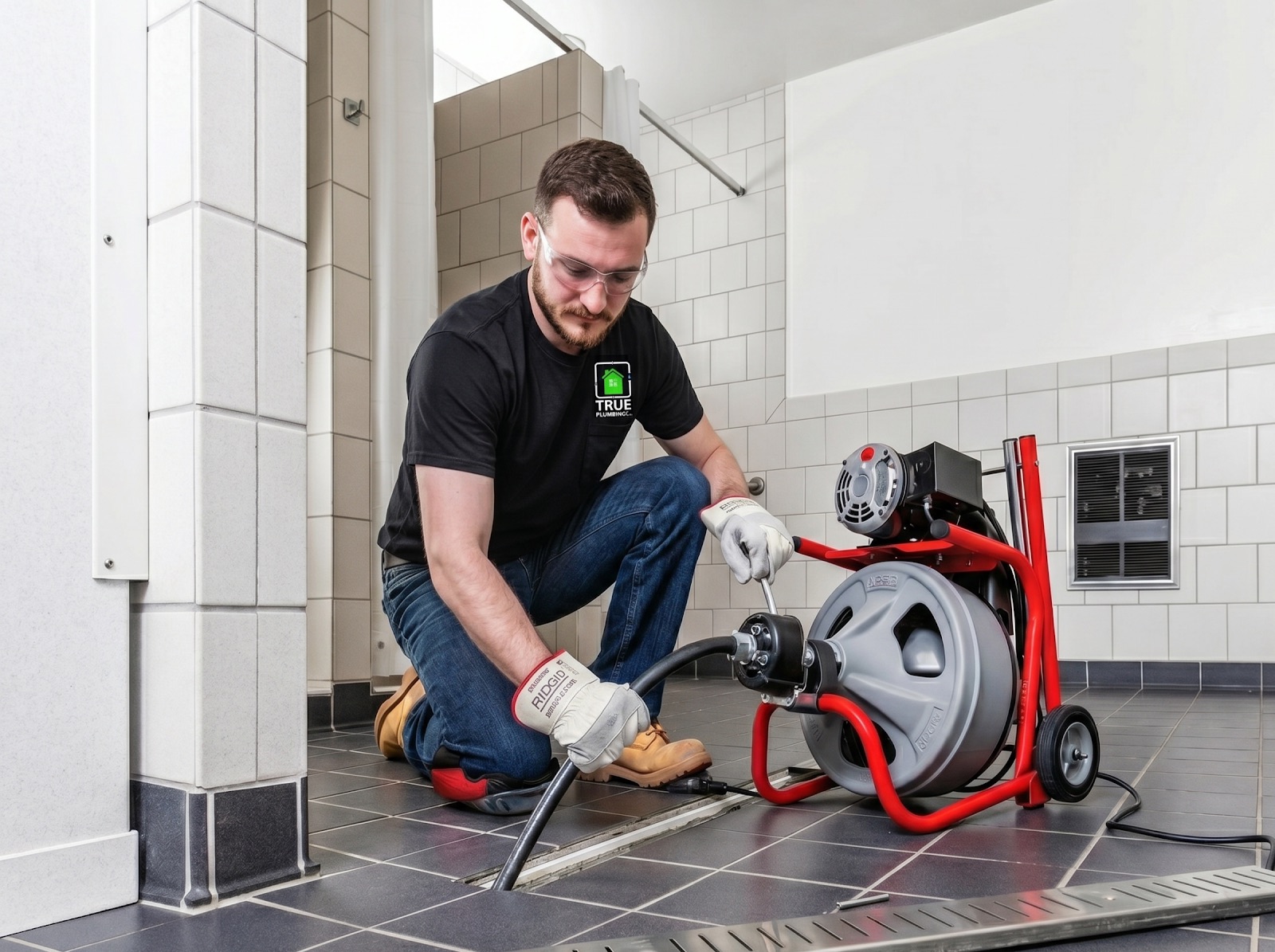
A drain snake and a hydro jet solve different problems. A snake opens a path through a localized blockage. A hydro jet uses controlled high-pressure water to remove broader buildup from suitable pipe. The right choice depends on what is in the line, whether the problem returns, and whether the pipe is sound enough for jetting.
True Plumbing runs both methods across Clark County. Camera inspection is useful when the line can be viewed and the condition or repair scope is uncertain. Details and booking are on the hydro jetting service page.
What a drain snake does
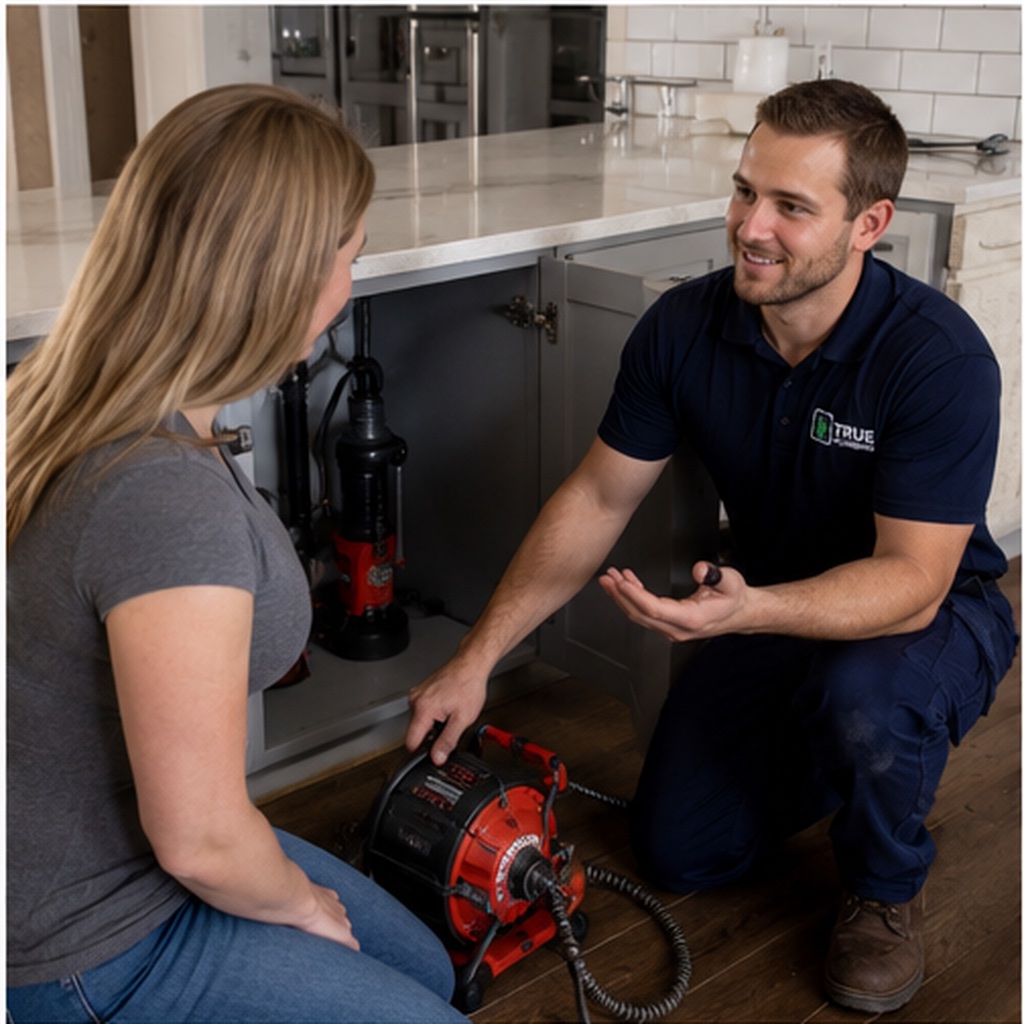
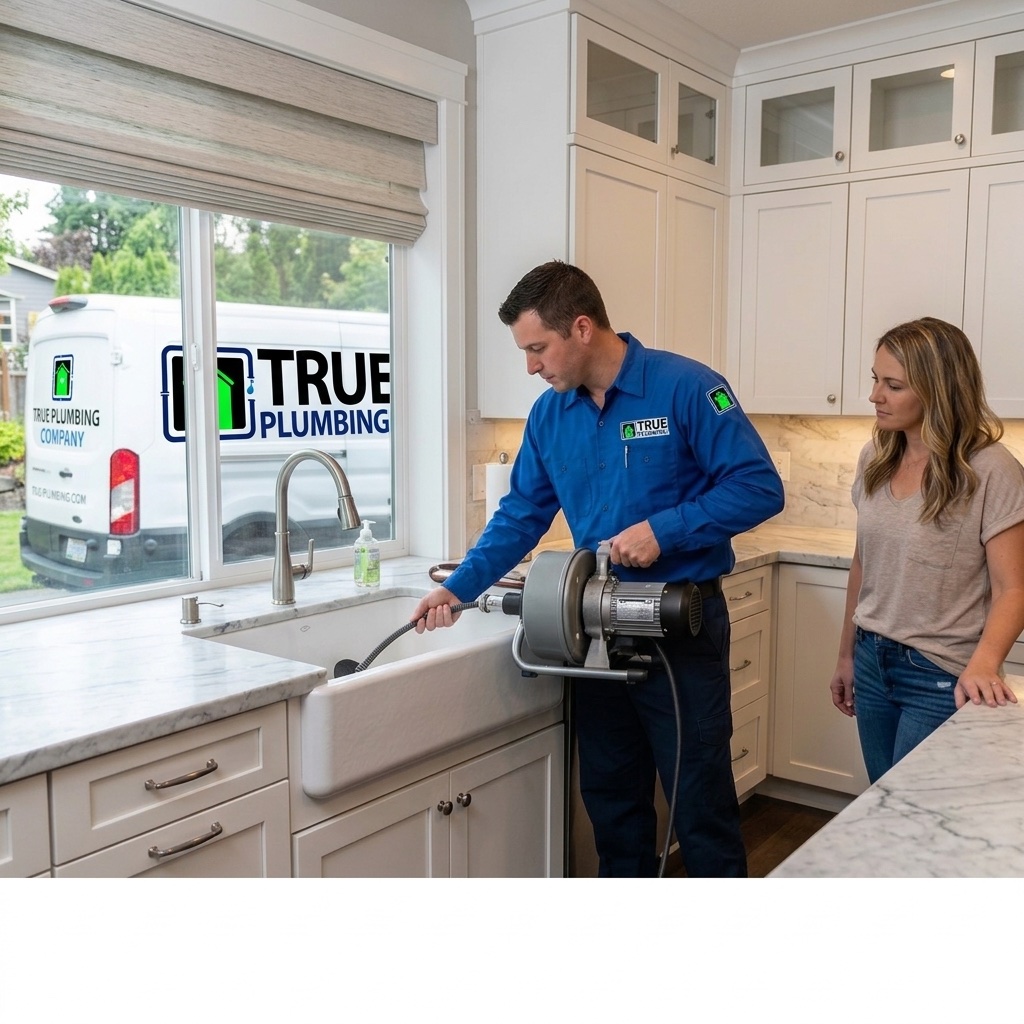
A drain machine feeds a rotating cable through the pipe. Different cutting heads can break up hair, soft waste, or some fine root growth. For a single fixture with a reachable clog, snaking is often the simplest useful first step. A recurring root problem needs more context than the size of the root alone.
The limitation is that a cable may open the middle of a grease-coated line without removing the coating. Water flows again, but the remaining buildup can catch more debris. That is one reason a drain that has been snaked repeatedly may slow down again.
What hydro jetting does
A jetting hose directs water through nozzles chosen for the pipe and the material being removed. It can remove grease, sludge, and some fine root growth while washing loosened debris toward an access point. Pressure and nozzle selection are adjusted to the line rather than set to one number for every job.
Jetting is not automatically the better option. A badly offset joint, collapsed section, or fragile pipe can call for a different approach. A camera inspection helps identify those conditions before high-pressure cleaning begins.
When each method usually fits
- Snaking: a localized clog, a first-time stoppage, or a line that needs a cautious mechanical opening.
- Hydro jetting: recurring grease or sludge, widespread buildup, or some fine root growth in a sound line that needs more complete cleaning.
- Repair instead of cleaning: a broken, collapsed, badly displaced, or root-entry defect that cleaning cannot close.
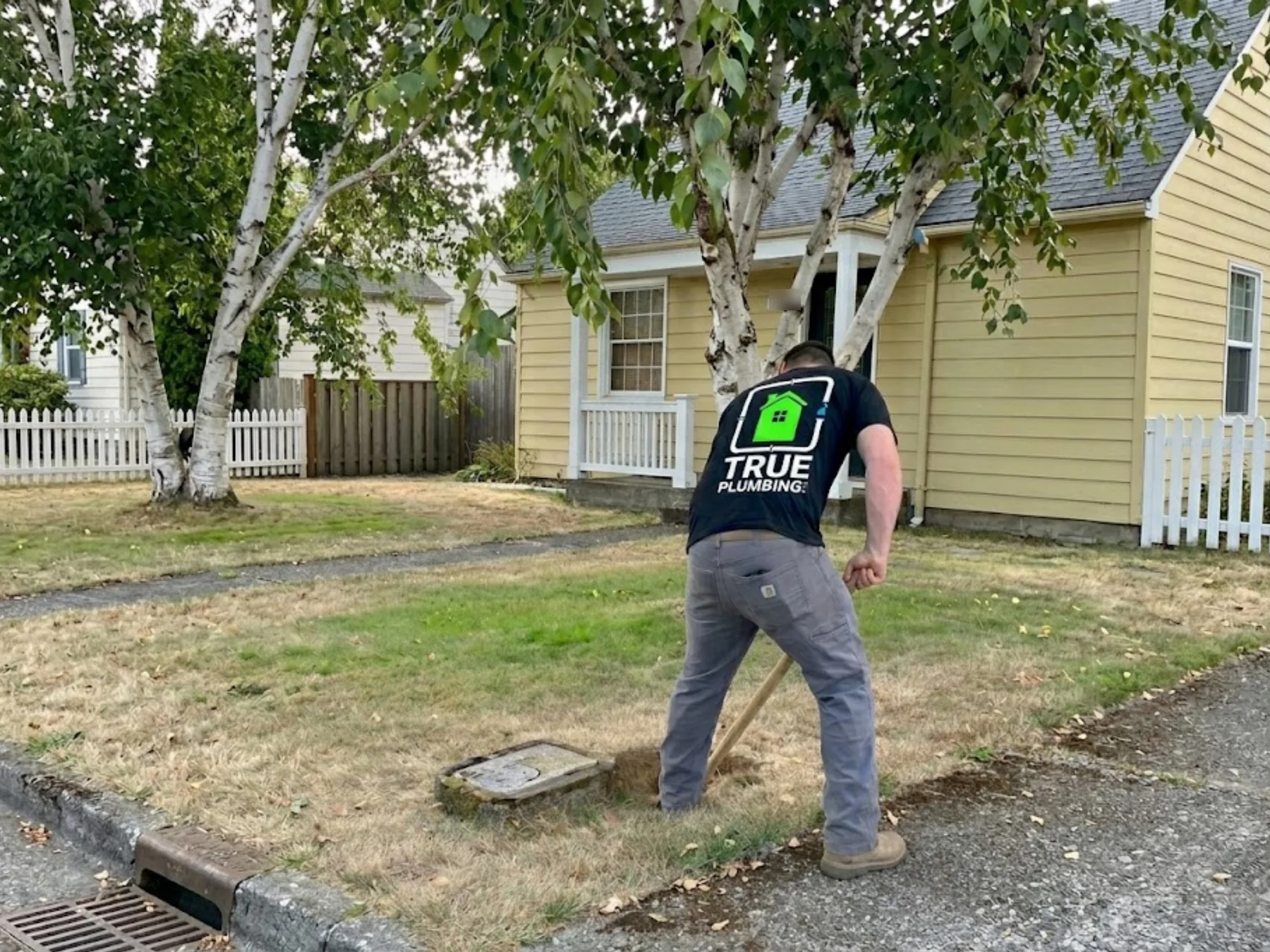
Root intrusion is property-specific. Mature trees and large shrubs near the sewer route can make roots more plausible, but Camas, Washougal, or any other municipality label does not diagnose the line. A camera can show visible roots, standing water, offsets, and damage, while locating helps connect a finding to the repair area. The plumber should explain whether the evidence supports maintenance, a spot repair, section replacement, or broader work.
What to do after the line is clear
Keep fats, oils, grease, wipes, and food scraps out of the drain. If the first warning is a fixture that drains more slowly each week, use our guide to understand what a slow drain can signal. Commercial kitchens and other high-use properties can also read how planned hydro jetting fits a maintenance program. Root-control products may sometimes be part of maintenance, but they do not repair broken pipe and should follow the product label and applicable utility or septic guidance.
If the blockage is recurring or affects several fixtures, True Plumbing can inspect the line and recommend the appropriate drain-cleaning method. Call (360) 207-6064 to confirm availability.